
Why Pay $20/month, When you can Self Host n8n @ $3.99 only

50+ InMails. Advanced Lead search. First 2 Users only

Promoted by BULDRR AI

How to turn an n8n workflow into a real SaaS (step by step) 🚀

(not a demo, not a hack — a product you can actually sell)

First, let’s clear a big misconception ❌

Most people think:

“I’ll just connect a frontend to an n8n webhook and call it a SaaS.”

That sounds easy, but it causes real problems:

  • ❌ licensing issues
  • ❌ no real ownership
  • ❌ hard to scale
  • ❌ not investor- or customer-friendly

So we’re not doing that.

Instead, we’ll:

  • take the logic from n8n
  • turn it into a real backend API
  • then build a proper web app around it

And yes — AI does most of the work 🤖


What we’re actually building 🧠

A real SaaS app with:

  • 🖥️ frontend (what users see)
  • ⚙️ backend API (business logic)
  • 🔐 authentication (login/signup)
  • 💳 payments (Stripe)
  • 🗄️ database
  • ☁️ deployment & infrastructure

No dependency on n8n at runtime.


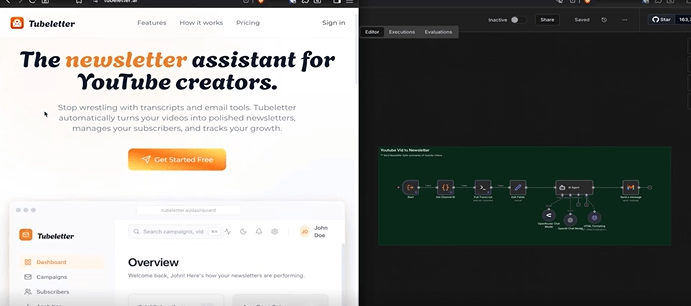
Real example: Tubeletter ✉️

The original idea started as an n8n workflow:

“Turn YouTube videos into newsletters”

The SaaS version (Tubeletter) lets users:

  • log in
  • add YouTube channels
  • pick videos
  • schedule newsletters
  • invite friends to subscribe
  • track email performance

All real SaaS behavior.

No fake demo energy.


Step 1: Start from your n8n workflow 🧩

Your n8n workflow is gold — not because you’ll host it, but because it describes logic.

What you do:

  1. Open your n8n workflow
  2. Export the workflow as JSON

Why this matters:

That JSON:

  • describes every step
  • shows inputs, outputs, transformations
  • becomes the spec for your backend

Think of it like:

“This is what my API should do.”


Step 2: Decide your stack (don’t overthink it) 🧱

Here’s a simple, proven setup:

Core tools:

  • 🧠 Cursor – AI-powered code editor (like VS Code)
  • 🤖 Claude / Gemini / GPT – for code generation

Backend:

  • Node.js (or Bun)
  • Docker (for deployment)

Frontend:

  • React
  • TypeScript

Database + Auth:

  • Supabase (database + login)

Payments:

  • Stripe

Infrastructure:

  • Cloudflare (DNS)
  • Cheap VPS (Hostinger works fine)
  • Reverse proxy (Traefik)

⚠️ Important:

You don’t need to master these — but you must understand what each one is for.


Step 3: Tell AI how your app should be structured 🧠📐

Before generating code, you guide the AI.

Create a rules file (for example agents.md) that says:

  • how folders should be organized
  • frontend and backend must be separate
  • Docker is required
  • how dependencies should be handled

Why this matters:

If you don’t do this, AI will freestyle…

and you’ll get spaghetti code 🍝


Step 4: Feed AI your n8n workflow 🧠➡️🤖

Now the magic part.

You give AI:

  • your exported n8n workflow JSON
  • helper files (like transcript fetching logic)
  • instructions like:

“Build a backend API that replicates this workflow.”

What AI does:

  • creates routes
  • creates services
  • turns workflow logic into API logic
  • generates documentation (README)

You just review.


Step 5: Replace simple AI calls with LangChain 🔁

Initially, AI may:

  • use direct OpenAI calls
  • use basic prompt logic

You improve this by telling it:

  • use LangChain
  • make the AI agent modular
  • allow future model changes

Why:

  • more flexibility
  • easier upgrades
  • better long-term product design

Step 6: Containerize everything with Docker 🐳

AI generates:

  • Dockerfile
  • docker-compose.yml

This means:

  • same setup everywhere
  • easy deployment
  • fewer “works on my machine” problems

You now have:

a backend that runs anywhere


Step 7: Configure environment variables 🔐

Create a .env file with:

  • OpenAI API key
  • YouTube API key
  • optional proxy settings

⚠️ Never hardcode keys into code.


Step 8: Run the backend locally 🖥️

In your project folder:

docker compose up

If you see an error like:

“Port already in use”

Just:

  • change the port in .env
  • restart Docker

No panic needed 😌


Step 9: Test your API like a real product 🔍

Use the README AI generated.

Example:

  • send a request to /api/newsletter/generate
  • pass a YouTube channel name
  • receive a full HTML newsletter

When this works:

🎉 congratulations — your n8n workflow is now a standalone API


Step 10: Debug using AI (seriously) 🛠️🤖

If something breaks:

  1. Copy the error
  2. Paste it into Claude / GPT
  3. Say: “Here’s the error. Fix it.”

AI reads logs, finds mistakes, corrects docs.

You’re supervising — not guessing.


Step 11: Build the frontend with AI 🎨

AI generates:

  • landing page
  • dashboard
  • login/signup screens
  • pricing page
  • animations (yes, even cursor effects)

You guide:

  • copy
  • layout
  • target audience

You don’t write code — you approve it.


Step 12: Add auth, payments, and subscriptions 💳🔐

Using:

  • Supabase → login & users
  • Stripe → plans & billing

AI wires:

  • free plan
  • paid tiers
  • feature restrictions

Now it’s a real SaaS, not a toy.


Step 13: Deploy to the internet 🌍

Steps:

  1. Push Docker containers to VPS
  2. Point domain via Cloudflare
  3. Start services

Your app is live.

People can:

  • sign up
  • pay
  • use it daily

The big lesson most people miss 💡

n8n is amazing for:

  • automation
  • internal workflows
  • fast experiments

But SaaS needs:

  • APIs
  • ownership
  • structure
  • separation

Once you decouple logic from n8n:

  • 🚫 no licensing stress
  • 📈 easier scaling
  • 💰 real monetization

Final mindset shift 🧠

You’re not “coding”.

You’re:

  • designing systems
  • guiding AI
  • reviewing outputs
  • shipping products

This is how AI + automation + n8n turn into real businesses.


If you want more learnings like this, then follow:

VIKASH KUMAR

on LinkedIn

Learn how to Build this Workflow with AI:

Follow us:

There’s no automation you can’t learn to build with BULDRR AI.

I'll show how you can implement AI AGENTS to take over repetitive tasks.

Promoted by BULDRR AI

How to turn an n8n workflow into a real SaaS (step by step) 🚀

(not a demo, not a hack — a product you can actually sell)

First, let’s clear a big misconception ❌

Most people think:

“I’ll just connect a frontend to an n8n webhook and call it a SaaS.”

That sounds easy, but it causes real problems:

  • ❌ licensing issues
  • ❌ no real ownership
  • ❌ hard to scale
  • ❌ not investor- or customer-friendly

So we’re not doing that.

Instead, we’ll:

  • take the logic from n8n
  • turn it into a real backend API
  • then build a proper web app around it

And yes — AI does most of the work 🤖


What we’re actually building 🧠

A real SaaS app with:

  • 🖥️ frontend (what users see)
  • ⚙️ backend API (business logic)
  • 🔐 authentication (login/signup)
  • 💳 payments (Stripe)
  • 🗄️ database
  • ☁️ deployment & infrastructure

No dependency on n8n at runtime.


Real example: Tubeletter ✉️

The original idea started as an n8n workflow:

“Turn YouTube videos into newsletters”

The SaaS version (Tubeletter) lets users:

  • log in
  • add YouTube channels
  • pick videos
  • schedule newsletters
  • invite friends to subscribe
  • track email performance

All real SaaS behavior.

No fake demo energy.


Step 1: Start from your n8n workflow 🧩

Your n8n workflow is gold — not because you’ll host it, but because it describes logic.

What you do:

  1. Open your n8n workflow
  2. Export the workflow as JSON

Why this matters:

That JSON:

  • describes every step
  • shows inputs, outputs, transformations
  • becomes the spec for your backend

Think of it like:

“This is what my API should do.”


Step 2: Decide your stack (don’t overthink it) 🧱

Here’s a simple, proven setup:

Core tools:

  • 🧠 Cursor – AI-powered code editor (like VS Code)
  • 🤖 Claude / Gemini / GPT – for code generation

Backend:

  • Node.js (or Bun)
  • Docker (for deployment)

Frontend:

  • React
  • TypeScript

Database + Auth:

  • Supabase (database + login)

Payments:

  • Stripe

Infrastructure:

  • Cloudflare (DNS)
  • Cheap VPS (Hostinger works fine)
  • Reverse proxy (Traefik)

⚠️ Important:

You don’t need to master these — but you must understand what each one is for.


Step 3: Tell AI how your app should be structured 🧠📐

Before generating code, you guide the AI.

Create a rules file (for example agents.md) that says:

  • how folders should be organized
  • frontend and backend must be separate
  • Docker is required
  • how dependencies should be handled

Why this matters:

If you don’t do this, AI will freestyle…

and you’ll get spaghetti code 🍝


Step 4: Feed AI your n8n workflow 🧠➡️🤖

Now the magic part.

You give AI:

  • your exported n8n workflow JSON
  • helper files (like transcript fetching logic)
  • instructions like:

“Build a backend API that replicates this workflow.”

What AI does:

  • creates routes
  • creates services
  • turns workflow logic into API logic
  • generates documentation (README)

You just review.


Step 5: Replace simple AI calls with LangChain 🔁

Initially, AI may:

  • use direct OpenAI calls
  • use basic prompt logic

You improve this by telling it:

  • use LangChain
  • make the AI agent modular
  • allow future model changes

Why:

  • more flexibility
  • easier upgrades
  • better long-term product design

Step 6: Containerize everything with Docker 🐳

AI generates:

  • Dockerfile
  • docker-compose.yml

This means:

  • same setup everywhere
  • easy deployment
  • fewer “works on my machine” problems

You now have:

a backend that runs anywhere


Step 7: Configure environment variables 🔐

Create a .env file with:

  • OpenAI API key
  • YouTube API key
  • optional proxy settings

⚠️ Never hardcode keys into code.


Step 8: Run the backend locally 🖥️

In your project folder:

docker compose up

If you see an error like:

“Port already in use”

Just:

  • change the port in .env
  • restart Docker

No panic needed 😌


Step 9: Test your API like a real product 🔍

Use the README AI generated.

Example:

  • send a request to /api/newsletter/generate
  • pass a YouTube channel name
  • receive a full HTML newsletter

When this works:

🎉 congratulations — your n8n workflow is now a standalone API


Step 10: Debug using AI (seriously) 🛠️🤖

If something breaks:

  1. Copy the error
  2. Paste it into Claude / GPT
  3. Say: “Here’s the error. Fix it.”

AI reads logs, finds mistakes, corrects docs.

You’re supervising — not guessing.


Step 11: Build the frontend with AI 🎨

AI generates:

  • landing page
  • dashboard
  • login/signup screens
  • pricing page
  • animations (yes, even cursor effects)

You guide:

  • copy
  • layout
  • target audience

You don’t write code — you approve it.


Step 12: Add auth, payments, and subscriptions 💳🔐

Using:

  • Supabase → login & users
  • Stripe → plans & billing

AI wires:

  • free plan
  • paid tiers
  • feature restrictions

Now it’s a real SaaS, not a toy.


Step 13: Deploy to the internet 🌍

Steps:

  1. Push Docker containers to VPS
  2. Point domain via Cloudflare
  3. Start services

Your app is live.

People can:

  • sign up
  • pay
  • use it daily

The big lesson most people miss 💡

n8n is amazing for:

  • automation
  • internal workflows
  • fast experiments

But SaaS needs:

  • APIs
  • ownership
  • structure
  • separation

Once you decouple logic from n8n:

  • 🚫 no licensing stress
  • 📈 easier scaling
  • 💰 real monetization

Final mindset shift 🧠

You’re not “coding”.

You’re:

  • designing systems
  • guiding AI
  • reviewing outputs
  • shipping products

This is how AI + automation + n8n turn into real businesses.


If you want more learnings like this, then follow:

VIKASH KUMAR

on LinkedIn

Learn how to Build this Workflow with AI:

Follow us:

Promoted by BULDRR AI

Our AI Articles

Learn from our AI Articles to excel in your profession ;)

THE RUBEN HASSID BLUEPRINT: Complete Creator & Channel Analysis

A comprehensive breakdown of Ruben Hassid’s digital presence, covering actionable insights, proven frameworks, and structured analysis designed for clarity, usability,...

Workflow Orchestration

1. Plan Node Default 2. Subagent Strategy 3. Self-Improvement Loop 4. Verification Before Done 5. Demand Elegance (Balanced) 6. Autonomous...

How to Use OpenClaw Skills — A Complete Beginner’s Guide

What is OpenClaw? OpenClaw is an open-source AI assistant designed as “AI that actually does things.” It doesn’t just chat....

Build a $10,000 RAG system using Gemini + Claude Code

This ‘$10,000 RAG system’ isn’t about expensive infrastructure—it’s about how you structure retrieval....

Free OpenRouter API Keys & Free Models List [Updated April 2026]

Get a free OpenRouter API key in minutes. See all free models available in 2026, rate limits, and how to...

7 AI Agents Clients Are Paying $2,000+/Month For in 2026 [Real Examples]

Discover the 7 AI agents businesses are actively buying in 2026 — with real pricing, use cases, and how to...

Comprehensive Channel Analysis: Alex Hormozi

Alex Hormozi gives away what others sell for $10K—not to make money from content, but to manufacture million-dollar businesses at...

Beginner to Pro Guide: Using the Agentic SEO Claude Skill

This isn’t just an SEO audit—it’s a feedback loop where your system analyzes, prioritizes, and answers based on your data,...

Top 60 Claude Skills, Workflows & GitHub Repos for AI

This isn’t just a list. It’s a full-stack AI toolkit: from coding agents → to frameworks → to workflows →...

How to Use Claude Code for Free in 2026 (No Subscription Needed)

Yes, you can use Claude Code for free. This guide shows exactly how — free tier limits, local model workarounds,...

Frequently Asked Questions

We share all our insights and resources for free, but building them isn’t cheap. Ads help us recover those costs so we can keep offering everything at no charge forever.

Yes, Ofcourse. Contact us and we’ll set it up. We also offer 100+ hours of free visibility to select brands.

No, nothing at all. In fact, many ads come with extra discounts for you.

Yes, sometimes. If you buy through our links, we may earn a small commission at no extra cost to you.

1:1 Free Strategy Session
Your competitors are already automating. Are you still paying for it manually?

Do you want to adopt AI Automation?

Every hour your team does repetitive work, you're burning real money.
While you wait, faster businesses are cutting costs and moving quicker.
AI and automations aren't the future anymore — they're the present.

Book a live 1-on-1 session where we show you exactly which of your daily tasks can be automated — and what it’s costing you not to.