
Why Pay $20/month, When you can Self Host n8n @ $3.99 only

50+ InMails. Advanced Lead search. First 2 Users only

Promoted by BULDRR AI

#1 Turn Your Profile Into a Client-Closing Machine – by Matt Lakajev

PlayBook#1 – (Framework sourced from Matt Lakajev’s strategy)

Why your profile matters

Most freelancers treat their LinkedIn profile like a CV.
Matt Lakajev treats it like a sales page that builds trust and turns strangers into leads.
Your profile must answer three questions in less than five seconds:

1 — Is this person real?
2 — Do they help people like me?
3 — Do I clearly understand what they do?

If a profile fails any of these, people leave and never return.
This is based on the “Reality Gate” and “Relevance Gate” in the Trust Framework.
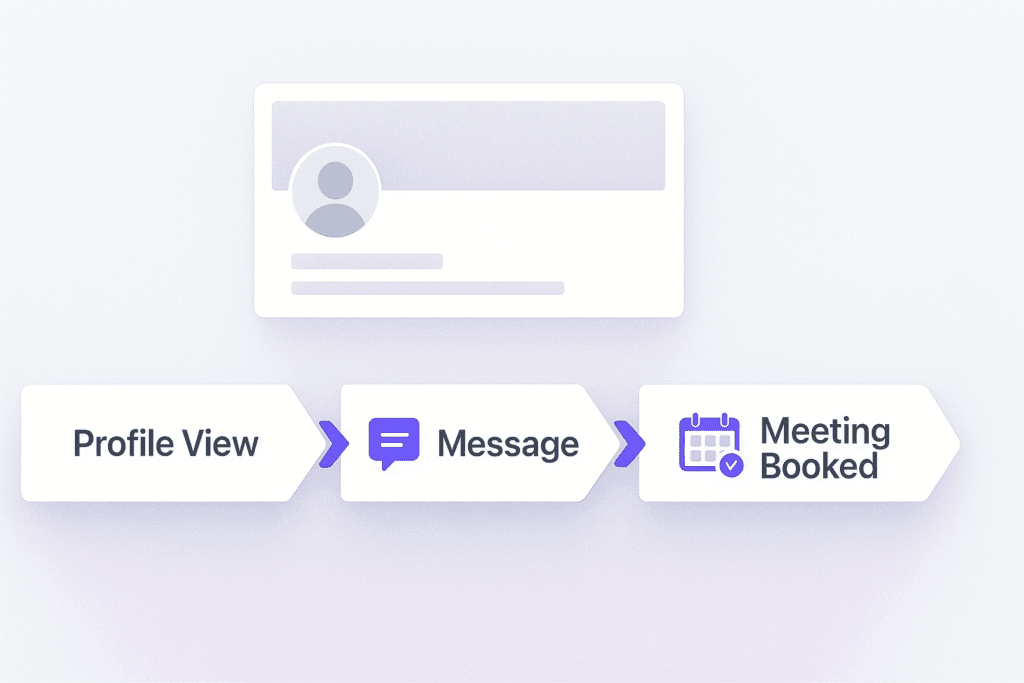

The Profile Funnel Structure

Your profile has one main job:
Move a visitor toward a conversation.

The structure below supports that objective:

  1. Profile Photo
  2. Banner
  3. Headline
  4. “Visit Website” Button
  5. Featured Section
  6. About Section

We will complete each one with direct, practical instructions.

Step 1 — Profile Photo: Pass the “Weirdo Test”

A clear, friendly headshot reduces risk and increases trust.
This is the first conversion moment.

Requirements:

  • Face takes most of the frame (no faraway shots)
  • Good lighting
  • Warm, approachable facial expression
  • No sunglasses or distracting backgrounds

A professional photo is ideal, but a clean smartphone photo works fine.

Step 2 — Banner: Your Silent Elevator Pitch

The banner is a billboard at the top of your funnel.
It must clearly show:

→ Who you help
→ What result you create

Avoid generic city skylines or abstract graphics.
Images of you working, speaking, or collaborating work best.
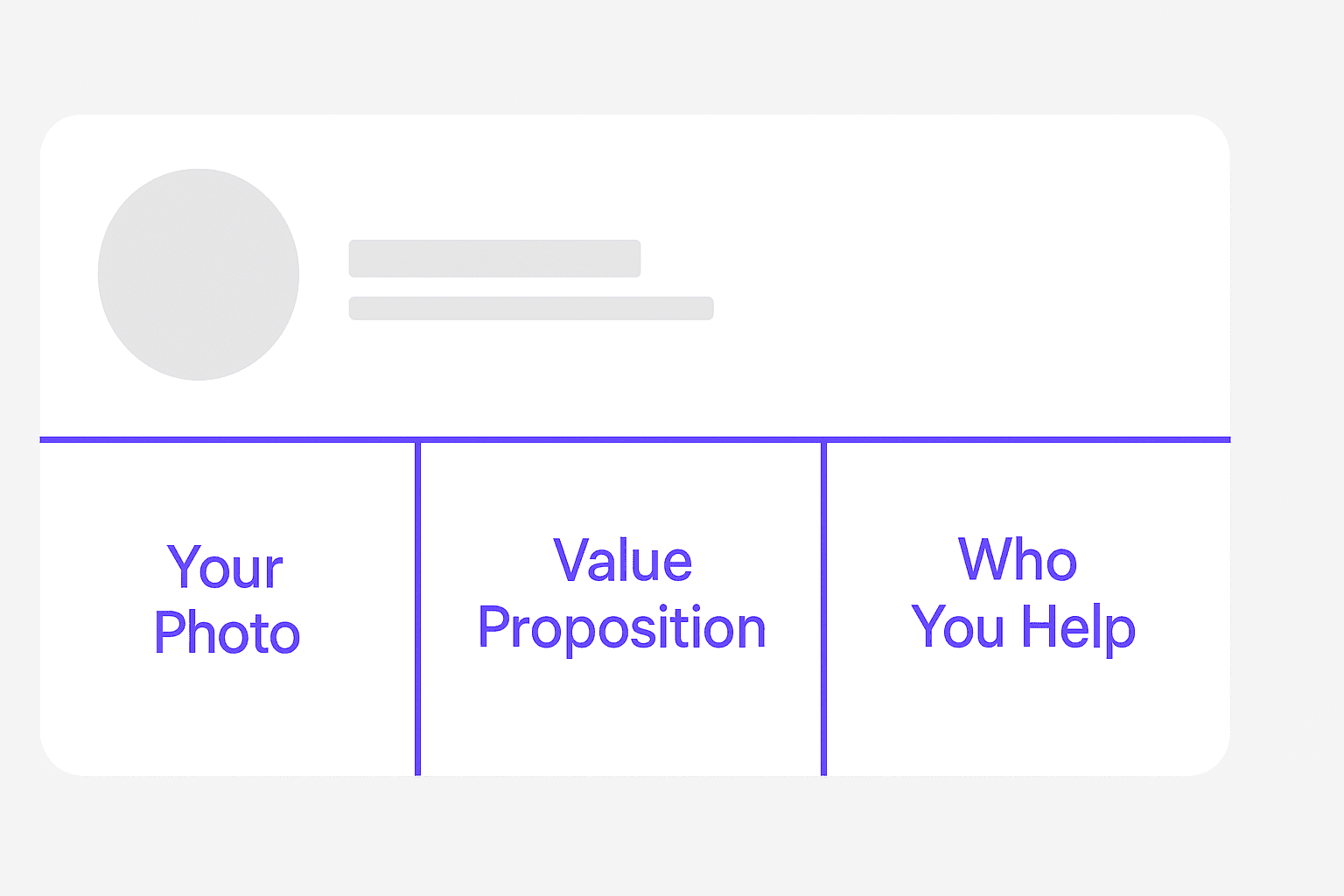
A simple structure you can follow:

SectionWhat to include
LeftA picture of you (optional)
CenterValue statement: The result you help clients achieve
RightTarget client (who you help)

Example wording:
“Helping D2C brands increase revenue with fast, conversion-focused websites.”

Test this:
If someone sees only your banner for one second — do they understand your business?


Step 3 — Headline: “Disgusting Clarity”

This is the most important text on your entire profile.
It appears everywhere: comments, post headers, searches, DMs.
If your headline is vague, the sale dies here.

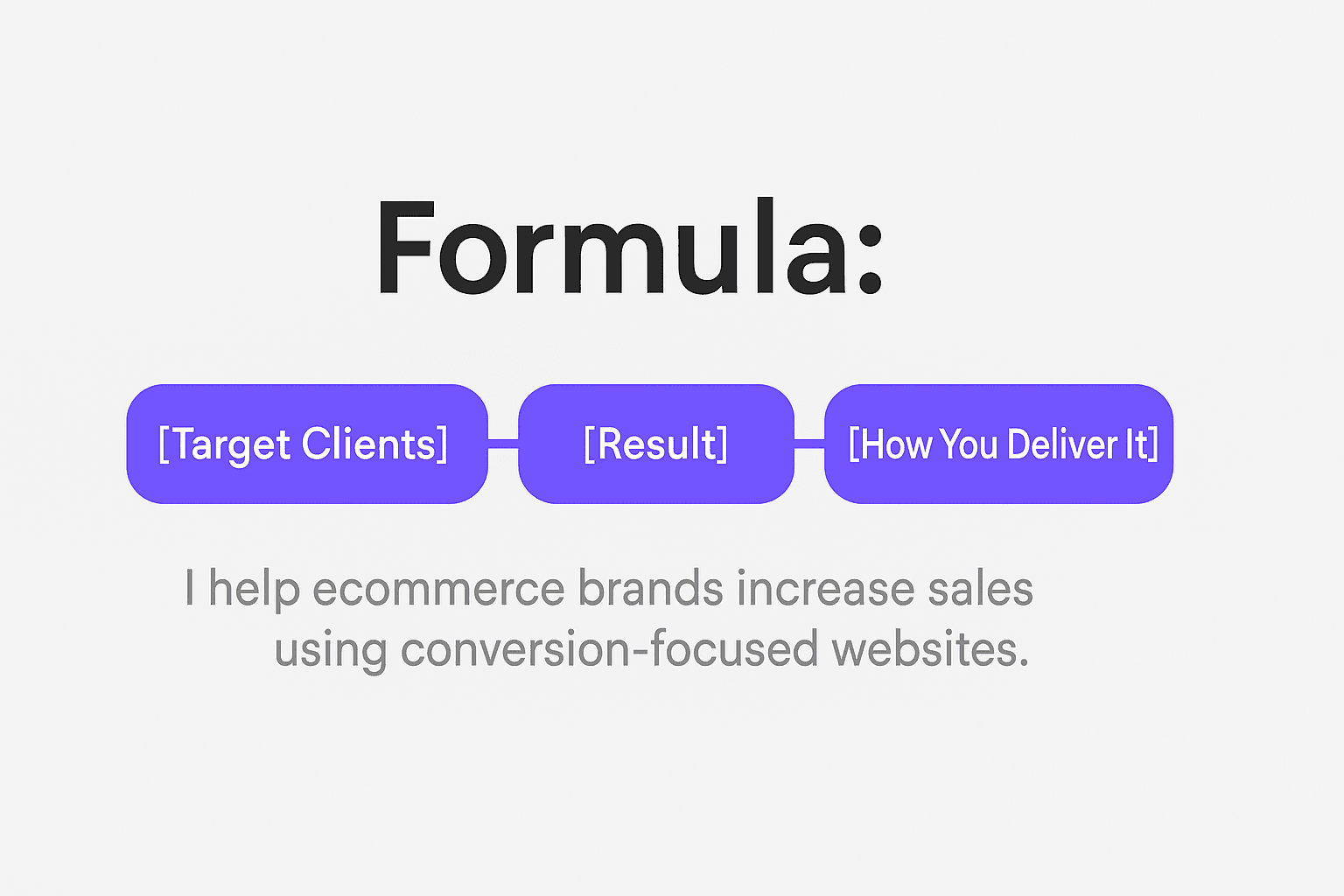
Use this formula:
I help [specific audience] achieve [specific result] using [your method].

Clear examples:

  • I help SaaS teams book qualified demos through LinkedIn outreach systems.
  • I help D2C brands boost sales with 7-day high-speed website builds.

Avoid:

  • “Entrepreneur | Founder | Growth Expert”
  • Inspirational quotes

Your headline must show you solve a real problem for a real group of people.

Write yours now using the formula above.


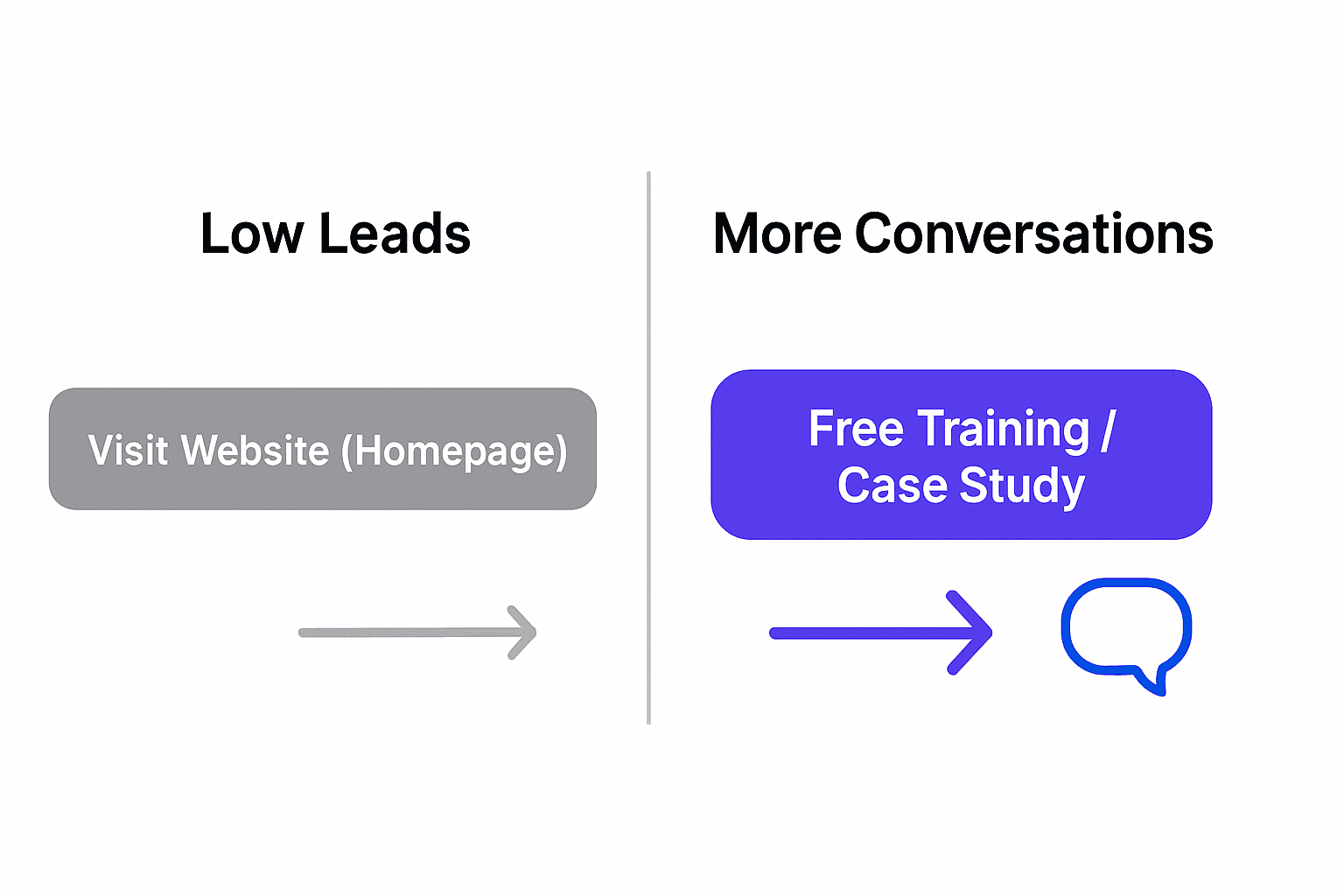
Step 4 — “Visit Website” Button: Turn Visitors Into Leads

Most people either:
• Link to their homepage
• Or directly link to booking a call (too much pressure early on)

Better approach:
Link to a lead magnet or short free resource.
This allows prospects to engage without fear.

Suggested button text:

  • Free Training
  • See Client Results
  • Get the Playbook

This captures warmer traffic and gives you a reason to follow up later.

Step 5 — Featured Section: Where Buyers Raise Their Hand

This section should act like a filter to identify serious visitors.
Someone who clicks a featured item is signaling interest.
Treat them as a warm lead.

What to include here:

Do not include:

  • Random interviews
  • Press mentions that do not convert
  • Resume-style documents

One strong asset beats five weak ones.


Step 6 — About Section: Simple, Not Emotional Biography

In Matt’s model, this area has lower impact and should not take a lot of time.
Keep it functional and supportive.

Four short elements:

  1. Who you help
  2. The problem they face
  3. Your solution in one or two lines
  4. A clear call-to-action (“Message me the word ‘Website’ and I’ll help you…”)

Avoid long storytelling here. People rarely read the full block.


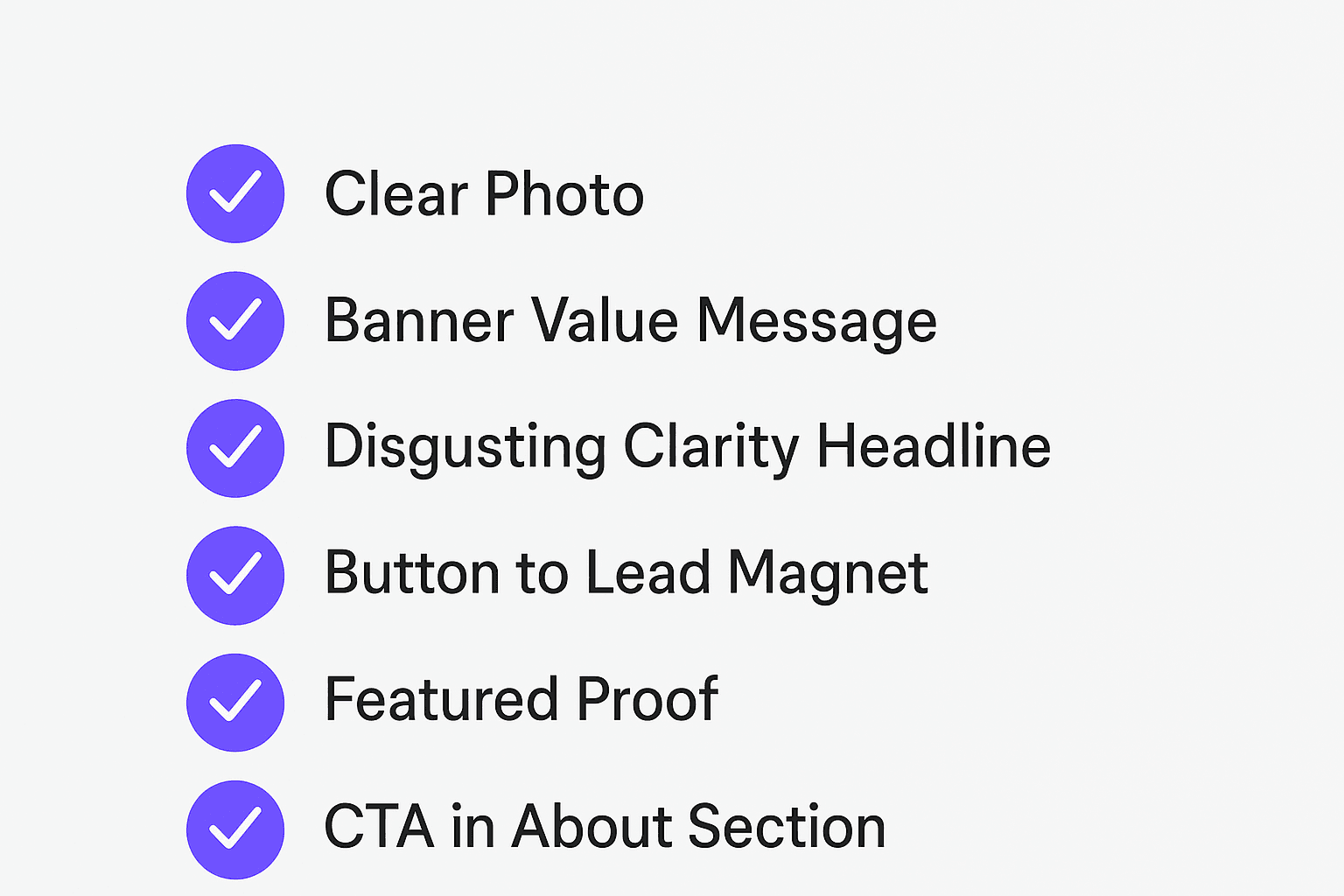
Quick Evaluation Checklist

Use this as a final test once you complete all steps:

RequirementStatus
Clear, friendly headshot☑️
Banner shows result + audience☑️
Headline uses “I help…” clarity☑️
Button links to a value resource☑️
Featured shows proof or lead magnet☑️
CTA exists in About section☑️

Complete all six, and your profile becomes a trust-building asset.


Final Goal for Playbook #1

A new visitor should immediately think:

“This person helps people like me get a result I want.
I should contact them.”

Once your profile accomplishes that, we move to:

Playbook #2 – Content that turns attention into conversations

Learn how to Build this Workflow with AI:

Follow us:

There’s no automation you can’t learn to build with BULDRR AI.

I'll show how you can implement AI AGENTS to take over repetitive tasks.

Promoted by BULDRR AI

#1 Turn Your Profile Into a Client-Closing Machine – by Matt Lakajev

PlayBook#1 – (Framework sourced from Matt Lakajev’s strategy)

Why your profile matters

Most freelancers treat their LinkedIn profile like a CV.
Matt Lakajev treats it like a sales page that builds trust and turns strangers into leads.
Your profile must answer three questions in less than five seconds:

1 — Is this person real?
2 — Do they help people like me?
3 — Do I clearly understand what they do?

If a profile fails any of these, people leave and never return.
This is based on the “Reality Gate” and “Relevance Gate” in the Trust Framework.


The Profile Funnel Structure

Your profile has one main job:
Move a visitor toward a conversation.

The structure below supports that objective:

  1. Profile Photo
  2. Banner
  3. Headline
  4. “Visit Website” Button
  5. Featured Section
  6. About Section

We will complete each one with direct, practical instructions.


Step 1 — Profile Photo: Pass the “Weirdo Test”

A clear, friendly headshot reduces risk and increases trust.
This is the first conversion moment.

Requirements:

  • Face takes most of the frame (no faraway shots)
  • Good lighting
  • Warm, approachable facial expression
  • No sunglasses or distracting backgrounds

A professional photo is ideal, but a clean smartphone photo works fine.


Step 2 — Banner: Your Silent Elevator Pitch

The banner is a billboard at the top of your funnel.
It must clearly show:

→ Who you help
→ What result you create

Avoid generic city skylines or abstract graphics.
Images of you working, speaking, or collaborating work best.

A simple structure you can follow:

SectionWhat to include
LeftA picture of you (optional)
CenterValue statement: The result you help clients achieve
RightTarget client (who you help)

Example wording:
“Helping D2C brands increase revenue with fast, conversion-focused websites.”

Test this:
If someone sees only your banner for one second — do they understand your business?


Step 3 — Headline: “Disgusting Clarity”

This is the most important text on your entire profile.
It appears everywhere: comments, post headers, searches, DMs.
If your headline is vague, the sale dies here.

Use this formula:
I help [specific audience] achieve [specific result] using [your method].

Clear examples:

  • I help SaaS teams book qualified demos through LinkedIn outreach systems.
  • I help D2C brands boost sales with 7-day high-speed website builds.

Avoid:

  • “Entrepreneur | Founder | Growth Expert”
  • Inspirational quotes

Your headline must show you solve a real problem for a real group of people.

Write yours now using the formula above.


Step 4 — “Visit Website” Button: Turn Visitors Into Leads

Most people either:
• Link to their homepage
• Or directly link to booking a call (too much pressure early on)

Better approach:
Link to a lead magnet or short free resource.
This allows prospects to engage without fear.

Suggested button text:

  • Free Training
  • See Client Results
  • Get the Playbook

This captures warmer traffic and gives you a reason to follow up later.


Step 5 — Featured Section: Where Buyers Raise Their Hand

This section should act like a filter to identify serious visitors.
Someone who clicks a featured item is signaling interest.
Treat them as a warm lead.

What to include here:

Do not include:

  • Random interviews
  • Press mentions that do not convert
  • Resume-style documents

One strong asset beats five weak ones.


Step 6 — About Section: Simple, Not Emotional Biography

In Matt’s model, this area has lower impact and should not take a lot of time.
Keep it functional and supportive.

Four short elements:

  1. Who you help
  2. The problem they face
  3. Your solution in one or two lines
  4. A clear call-to-action (“Message me the word ‘Website’ and I’ll help you…”)

Avoid long storytelling here. People rarely read the full block.


Quick Evaluation Checklist

Use this as a final test once you complete all steps:

RequirementStatus
Clear, friendly headshot☑️
Banner shows result + audience☑️
Headline uses “I help…” clarity☑️
Button links to a value resource☑️
Featured shows proof or lead magnet☑️
CTA exists in About section☑️

Complete all six, and your profile becomes a trust-building asset.


Final Goal for Playbook #1

A new visitor should immediately think:

“This person helps people like me get a result I want.
I should contact them.”

Once your profile accomplishes that, we move to:

Playbook #2 – Content that turns attention into conversations

Learn how to Build this Workflow with AI:

Follow us:

Promoted by BULDRR AI

Our AI Articles

Learn from our AI Articles to excel in your profession ;)

How to Use OpenClaw Skills — A Complete Beginner’s Guide

What is OpenClaw? OpenClaw is an open-source AI assistant designed as “AI that actually does things.” It doesn’t just chat....

Build a $10,000 RAG system using Gemini + Claude Code

This ‘$10,000 RAG system’ isn’t about expensive infrastructure—it’s about how you structure retrieval....

Free OpenRouter API Keys & Free Models List [Updated April 2026]

Get a free OpenRouter API key in minutes. See all free models available in 2026, rate limits, and how to...

7 AI Agents Clients Are Paying $2,000+/Month For in 2026 [Real Examples]

Discover the 7 AI agents businesses are actively buying in 2026 — with real pricing, use cases, and how to...

Comprehensive Channel Analysis: Alex Hormozi

Alex Hormozi gives away what others sell for $10K—not to make money from content, but to manufacture million-dollar businesses at...

Beginner to Pro Guide: Using the Agentic SEO Claude Skill

This isn’t just an SEO audit—it’s a feedback loop where your system analyzes, prioritizes, and answers based on your data,...

Top 60 Claude Skills, Workflows & GitHub Repos for AI

This isn’t just a list. It’s a full-stack AI toolkit: from coding agents → to frameworks → to workflows →...

How to Use Claude Code for Free in 2026 (No Subscription Needed)

Yes, you can use Claude Code for free. This guide shows exactly how — free tier limits, local model workarounds,...

The Billion-Dollar AI Board: Build Your Free AI Board of Directors with 8 Business Legends

What if you could ask Alex Hormozi about your pricing, Grant Cardone about your sales volume, and Gary Vee about...

ChatGPT Image Model 1.5 Prompting Guide: Get Better Images Every Time [2026]

The complete guide to prompting ChatGPT Image Model 1.5. Learn prompt structures, style controls, and advanced techniques to generate better...

Frequently Asked Questions

We share all our insights and resources for free, but building them isn’t cheap. Ads help us recover those costs so we can keep offering everything at no charge forever.

Yes, Ofcourse. Contact us and we’ll set it up. We also offer 100+ hours of free visibility to select brands.

No, nothing at all. In fact, many ads come with extra discounts for you.

Yes, sometimes. If you buy through our links, we may earn a small commission at no extra cost to you.

1:1 Free Strategy Session
Your competitors are already automating. Are you still paying for it manually?

Do you want to adopt AI Automation?

Every hour your team does repetitive work, you're burning real money.
While you wait, faster businesses are cutting costs and moving quicker.
AI and automations aren't the future anymore — they're the present.

Book a live 1-on-1 session where we show you exactly which of your daily tasks can be automated — and what it’s costing you not to.