
Lara Acosta LinkedIn Templates and Hooks (2026 Examples)

Lara Acosta LinkedIn Templates and Hooks
Updated: August 21, 2026

Ever read a LinkedIn post and felt pulled to keep reading, line after line? That is not luck. That is a formula. Lara Acosta grew into one of LinkedIn’s fastest-rising writers by using simple, repeatable patterns for her hooks and posts. The best part is that you can borrow these patterns too. In this guide you will get clear Lara Acosta LinkedIn templates, hook examples you can copy, and the framework behind her viral posts. No fluff, just patterns you can use today.

What You’ll Learn

  • Why Lara Acosta’s LinkedIn posts get so much attention
  • Simple hook templates you can copy and fill in
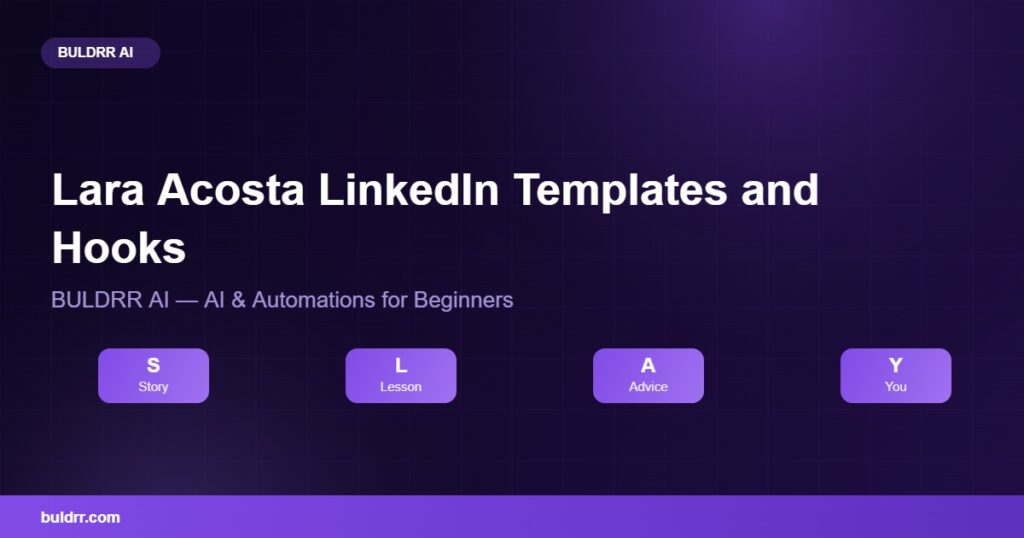
  • The SLAY framework she uses to build full posts
  • A ready-to-use post template with an example
  • How to sound like you, not like a robot

Who Is Lara Acosta and Why Copy Her?

Lara Acosta is a LinkedIn creator known for fast growth and posts that spark hundreds of comments. She built a large following by writing in a clear, human way that keeps people reading.

Here is why her style is worth studying. Most LinkedIn posts are like a plain gray wall. People scroll right past. Lara’s posts are like a bright shop window. They make you stop and look inside.

At BULDRR AI, we studied dozens of her top posts to spot the patterns. The good news for you is that these patterns are not secret magic. They are simple templates anyone can follow, even if English is not your first language. For a wider view, our breakdown of the Acosta LinkedIn model shows how it all fits together.

The Secret Sauce: It Starts With the Hook

The hook is the first line of your post. It is the only part people see before they decide to click “see more.” So it has to earn that click.

Think of the hook like the smell of fresh bread near a bakery. You were not planning to buy bread. But that smell pulls you in. A strong hook does the same to a busy scroller.

Lara often says good writing is more about psychology than grammar. The job of line one is to make you want line two, right? One of her most useful tips is to be specific. Vague hooks get skipped. Hooks with a number, a name, or a clear result get read.

Lara Acosta LinkedIn Hook Templates You Can Copy

Here are simple hook templates based on the patterns Lara uses. Just swap in your own details. Notice how each one promises something clear.

The number result: “How I grew my [thing] by [number] in [time frame].”

Example: “How I grew my email list by 3,000 people in 90 days.”

The mistake: “Stop doing [common thing]. Here is what to do instead.”

Example: “Stop posting every day. Here is what to do instead.”

The secret: “Nobody talks about [topic]. But it changed my [result].”

Example: “Nobody talks about resting. But it doubled my output.”

The bold claim: “[Popular belief] is wrong. Here is the truth.”

Example: “Working 12 hours a day is wrong. Here is the truth.”

The list promise: “[Number] lessons from [experience] that took me [cost] to learn.”

Example: “7 lessons from my first failed business that cost me 2 years.”

Pick one, fill in the blanks, and you have a hook that pulls people in. It is a lot like a recipe card. The structure stays the same, but you change the ingredients.

The SLAY Framework: How Lara Builds a Full Post

A hook gets the click. But the rest of the post keeps people reading and makes them comment. Lara is often linked to a simple pattern many creators call the SLAY framework. Each letter stands for one part of the post.

S is for Story. Start with a short, real moment. People connect with stories, not lectures.

L is for Lesson. Share the one big thing you learned from that moment.

A is for Actionable advice. Give clear steps the reader can try today. This is the part most people skip, so it makes you stand out.

Y is for You. End by turning it over to the reader. Ask a question or invite them to try it.

Think of SLAY like building a sandwich. The story is the bread that holds it together. The lesson and advice are the filling that people actually want. And the “you” is the plate you hand it over on.

A Full Post Template With an Example

Here is a simple template that puts the hook and SLAY together. Copy this shape and fill it with your own story.

Line 1 (Hook): A specific, curious opening line.

Line 2 (Re-hook): One short line that adds mystery and keeps them reading.

Lead: Tell the reader what they will learn.

Body (Story plus Lesson plus Advice): Short lines, one idea each.

Power ending: A two-line summary that lands with impact.

CTA: A question that invites a comment.

Now here is that template filled in as a real example:

“I lost my biggest client on a Monday morning.

It turned out to be the best thing for my business.

Here is what that painful week taught me about pricing.

I had been charging too little for years. I was scared to raise my rates. So I said yes to every request, even bad ones.

When that client left, I finally raised my prices by 40 percent. The next three clients paid it without blinking.

Lesson: low prices do not keep clients. Clear value does.

Try this today. Look at your lowest-paying client. Ask yourself what a fair price really is.

What is holding you back from raising your rates?”

See how short each line is? That white space is not empty. It makes the post easy to read on a phone.

Real-World Before and After

Meet Sam. He is a coach who posted on LinkedIn for months with no results. His posts were long blocks of text with dull first lines like “Today I want to share some thoughts on productivity.” Almost no one read them.

Then Sam tried these templates. He opened with “I wasted 4 years being busy instead of productive.” He used the SLAY shape and short lines. That single post got more comments than his last ten posts combined. Same coach, same topic, a very different result.

Common Questions

Do I need to copy Lara Acosta word for word?

No. Copy the structure, not the exact words. Use her hook shapes and the SLAY pattern, then fill them with your own stories and voice.

How long should a LinkedIn post be?

There is no perfect length. Many strong posts run short, with one idea per line. Focus on keeping every line easy to read, not on hitting a word count.

What if English is not my first language?

These templates help even more then. Short lines and simple words are easier to write and easier to read. Clear beats fancy every time on LinkedIn.

How often should I post?

Consistency matters more than volume. Lara has said she grew faster without posting every single day. A few strong posts each week beat daily weak ones.

Worried Your Posts Sound Boring? Read This

Many people freeze because they think their life is not interesting enough to write about. That is almost never true. You do not need a dramatic story. A small moment, like losing a client or fixing one mistake, is plenty. These templates give you the shape. Your real experience gives it life. Start with one honest story, keep the lines short, and you will sound more human than most posts on the feed.

Quick Recap

  • The hook is the most important line, so make it specific
  • Use Lara Acosta’s hook templates and just swap in your details
  • Build the full post with the SLAY framework: Story, Lesson, Advice, You
  • Keep lines short so posts are easy to read on a phone
  • Copy the structure, not the exact words, and add your own voice

What to Do Next

Write one hook today using the “number result” template. Just fill in the blanks with a real result from your own life, and you have the start of your next post. Then read our tips on how to actually grow on LinkedIn to keep the momentum going.

FAQ

What is the SLAY framework by Lara Acosta?

SLAY is a simple post pattern: Story, Lesson, Actionable advice, and You. You start with a short story, share the lesson, give clear steps, then turn it over to the reader with a question.

What makes a good LinkedIn hook?

A good hook is specific and curious. It uses a number, a name, or a clear result, and it makes the reader want to click “see more.” Vague opening lines get skipped in the feed.

Are Lara Acosta’s LinkedIn templates free to use?

Yes. The patterns behind her posts, like curiosity hooks and the SLAY structure, are ideas anyone can use. You simply follow the shape and fill it with your own stories.

How did Lara Acosta grow on LinkedIn so fast?

She focused on strong hooks, short readable lines, and posts built around real stories. She has said clear writing and consistency mattered more than posting every single day.

Can beginners use these LinkedIn templates?

Yes. These templates are made for beginners. You do not need fancy words or a big following. You just need one honest story and the simple structures shown above.

How many hooks should I write before posting?

Try writing three to five hooks for the same idea, then pick the strongest. This quick habit trains your eye and almost always gives you a better first line.

Ever read a LinkedIn post and felt pulled to keep reading, line after line? That is not luck. That is a formula. Lara Acosta grew into one of LinkedIn’s fastest-rising writers by using simple, repeatable patterns for her hooks and posts. The best part is that you can borrow these patterns too. In this guide you will get clear Lara Acosta LinkedIn templates, hook examples you can copy, and the framework behind her viral posts. No fluff, just patterns you can use today.

What You’ll Learn

  • Why Lara Acosta’s LinkedIn posts get so much attention
  • Simple hook templates you can copy and fill in
  • The SLAY framework she uses to build full posts
  • A ready-to-use post template with an example
  • How to sound like you, not like a robot

Who Is Lara Acosta and Why Copy Her?

Lara Acosta is a LinkedIn creator known for fast growth and posts that spark hundreds of comments. She built a large following by writing in a clear, human way that keeps people reading.

Here is why her style is worth studying. Most LinkedIn posts are like a plain gray wall. People scroll right past. Lara’s posts are like a bright shop window. They make you stop and look inside.

At BULDRR AI, we studied dozens of her top posts to spot the patterns. The good news for you is that these patterns are not secret magic. They are simple templates anyone can follow, even if English is not your first language. For a wider view, our breakdown of the Acosta LinkedIn model shows how it all fits together.

The Secret Sauce: It Starts With the Hook

The hook is the first line of your post. It is the only part people see before they decide to click “see more.” So it has to earn that click.

Think of the hook like the smell of fresh bread near a bakery. You were not planning to buy bread. But that smell pulls you in. A strong hook does the same to a busy scroller.

Lara often says good writing is more about psychology than grammar. The job of line one is to make you want line two, right? One of her most useful tips is to be specific. Vague hooks get skipped. Hooks with a number, a name, or a clear result get read.

Lara Acosta LinkedIn Hook Templates You Can Copy

Here are simple hook templates based on the patterns Lara uses. Just swap in your own details. Notice how each one promises something clear.

The number result: “How I grew my [thing] by [number] in [time frame].”

Example: “How I grew my email list by 3,000 people in 90 days.”

The mistake: “Stop doing [common thing]. Here is what to do instead.”

Example: “Stop posting every day. Here is what to do instead.”

The secret: “Nobody talks about [topic]. But it changed my [result].”

Example: “Nobody talks about resting. But it doubled my output.”

The bold claim: “[Popular belief] is wrong. Here is the truth.”

Example: “Working 12 hours a day is wrong. Here is the truth.”

The list promise: “[Number] lessons from [experience] that took me [cost] to learn.”

Example: “7 lessons from my first failed business that cost me 2 years.”

Pick one, fill in the blanks, and you have a hook that pulls people in. It is a lot like a recipe card. The structure stays the same, but you change the ingredients.

The SLAY Framework: How Lara Builds a Full Post

A hook gets the click. But the rest of the post keeps people reading and makes them comment. Lara is often linked to a simple pattern many creators call the SLAY framework. Each letter stands for one part of the post.

S is for Story. Start with a short, real moment. People connect with stories, not lectures.

L is for Lesson. Share the one big thing you learned from that moment.

A is for Actionable advice. Give clear steps the reader can try today. This is the part most people skip, so it makes you stand out.

Y is for You. End by turning it over to the reader. Ask a question or invite them to try it.

Think of SLAY like building a sandwich. The story is the bread that holds it together. The lesson and advice are the filling that people actually want. And the “you” is the plate you hand it over on.

A Full Post Template With an Example

Here is a simple template that puts the hook and SLAY together. Copy this shape and fill it with your own story.

Line 1 (Hook): A specific, curious opening line.

Line 2 (Re-hook): One short line that adds mystery and keeps them reading.

Lead: Tell the reader what they will learn.

Body (Story plus Lesson plus Advice): Short lines, one idea each.

Power ending: A two-line summary that lands with impact.

CTA: A question that invites a comment.

Now here is that template filled in as a real example:

“I lost my biggest client on a Monday morning.

It turned out to be the best thing for my business.

Here is what that painful week taught me about pricing.

I had been charging too little for years. I was scared to raise my rates. So I said yes to every request, even bad ones.

When that client left, I finally raised my prices by 40 percent. The next three clients paid it without blinking.

Lesson: low prices do not keep clients. Clear value does.

Try this today. Look at your lowest-paying client. Ask yourself what a fair price really is.

What is holding you back from raising your rates?”

See how short each line is? That white space is not empty. It makes the post easy to read on a phone.

Real-World Before and After

Meet Sam. He is a coach who posted on LinkedIn for months with no results. His posts were long blocks of text with dull first lines like “Today I want to share some thoughts on productivity.” Almost no one read them.

Then Sam tried these templates. He opened with “I wasted 4 years being busy instead of productive.” He used the SLAY shape and short lines. That single post got more comments than his last ten posts combined. Same coach, same topic, a very different result.

Common Questions

Do I need to copy Lara Acosta word for word?

No. Copy the structure, not the exact words. Use her hook shapes and the SLAY pattern, then fill them with your own stories and voice.

How long should a LinkedIn post be?

There is no perfect length. Many strong posts run short, with one idea per line. Focus on keeping every line easy to read, not on hitting a word count.

What if English is not my first language?

These templates help even more then. Short lines and simple words are easier to write and easier to read. Clear beats fancy every time on LinkedIn.

How often should I post?

Consistency matters more than volume. Lara has said she grew faster without posting every single day. A few strong posts each week beat daily weak ones.

Worried Your Posts Sound Boring? Read This

Many people freeze because they think their life is not interesting enough to write about. That is almost never true. You do not need a dramatic story. A small moment, like losing a client or fixing one mistake, is plenty. These templates give you the shape. Your real experience gives it life. Start with one honest story, keep the lines short, and you will sound more human than most posts on the feed.

Quick Recap

  • The hook is the most important line, so make it specific
  • Use Lara Acosta’s hook templates and just swap in your details
  • Build the full post with the SLAY framework: Story, Lesson, Advice, You
  • Keep lines short so posts are easy to read on a phone
  • Copy the structure, not the exact words, and add your own voice

What to Do Next

Write one hook today using the “number result” template. Just fill in the blanks with a real result from your own life, and you have the start of your next post. Then read our tips on how to actually grow on LinkedIn to keep the momentum going.

FAQ

What is the SLAY framework by Lara Acosta?

SLAY is a simple post pattern: Story, Lesson, Actionable advice, and You. You start with a short story, share the lesson, give clear steps, then turn it over to the reader with a question.

What makes a good LinkedIn hook?

A good hook is specific and curious. It uses a number, a name, or a clear result, and it makes the reader want to click “see more.” Vague opening lines get skipped in the feed.

Are Lara Acosta’s LinkedIn templates free to use?

Yes. The patterns behind her posts, like curiosity hooks and the SLAY structure, are ideas anyone can use. You simply follow the shape and fill it with your own stories.

How did Lara Acosta grow on LinkedIn so fast?

She focused on strong hooks, short readable lines, and posts built around real stories. She has said clear writing and consistency mattered more than posting every single day.

Can beginners use these LinkedIn templates?

Yes. These templates are made for beginners. You do not need fancy words or a big following. You just need one honest story and the simple structures shown above.

How many hooks should I write before posting?

Try writing three to five hooks for the same idea, then pick the strongest. This quick habit trains your eye and almost always gives you a better first line.

Author
Written By
Vikash Kumar
Building AI agents, n8n workflows and end-to-end automation for 30+ Brands across India, the US, Europe, Dubai & Australia. 7+ years of Experience saving founders real hours every week - no code required.
Ask more Questions about this Blog with AI:

Our AI Articles

Learn from our AI Articles to excel in your profession ;)

n8n MCP: How to Connect AI Agents to Any Tool (2026)

n8n MCP lets your AI agent connect to any tool through one shared standard, no custom code needed. Here is...

n8n Docker Setup: Install n8n the Easy Way (2026 Guide)

Learn how to install n8n with Docker step by step. A beginner-friendly 2026 guide to run n8n on your own...

How to Self Host n8n for Free: The Beginner VPS Setup Guide (2026)

The n8n cloud version has a free trial that runs out. After that, you pay a monthly fee for every...

10 Best n8n Workflows Every Business Should Automate

Manual work is killing business speed. In 2026, companies that still copy-paste data between apps are already behind. This is...

Automating the First 14 Days After Someone Buys From You

How to automate the first 14 days after a sale closes — welcome messages, account setup, kickoff booking, and day-7/day-14...

10 Questions to Ask Before Hiring an n8n Automation Agency

Before hiring an n8n automation agency, ask about their pricing model (per-workflow vs retainer), who owns the finished workflows, how...

n8n vs Zapier vs Make: Which Automation Tool is Best for Business

n8n is the best fit for businesses that want self-hosting, unlimited executions, and deep AI-agent capability and have some technical...

How to Use OpenRouter with n8n: Free AI Workflows (No Card Needed)

You keep hearing about AI automation but every option seems to cost money. ChatGPT Plus is $20 a month. Claude...

How to Automate Lead Follow-Up Calls with AI: A Step-by-Step Guide

Here is a number that should worry every business owner: leads that are called within five minutes of showing interest...

10 Claude Tips: From Using 10% of Claude to Actually Using It

A practical guide to getting more out of Claude, this post shares 10 tips from beginner to advanced, including choosing...

How Claude Killed Prompt Engineering (And What To Do Instead)

Anthropic’s latest Claude updates suggest a shift away from long, rule-heavy prompts toward minimal, goal-first context. This post explains Record...

Why AI Recommends the Business With Recent Reviews, Not Just More of Them

Why AI search tools like ChatGPT and Google AI Overviews weigh review recency and response rate above raw review count...
1:1 Free Strategy Session
Your competitors are already automating. Are you still paying for it manually?

Do you want to adopt AI Automation?

Every hour your team does repetitive work, you're burning real money.
While you wait, faster businesses are cutting costs and moving quicker.
AI and automations aren't the future anymore — they're the present.

Book a live 1-on-1 session where we show you exactly which of your daily tasks can be automated — and what it’s costing you not to.