
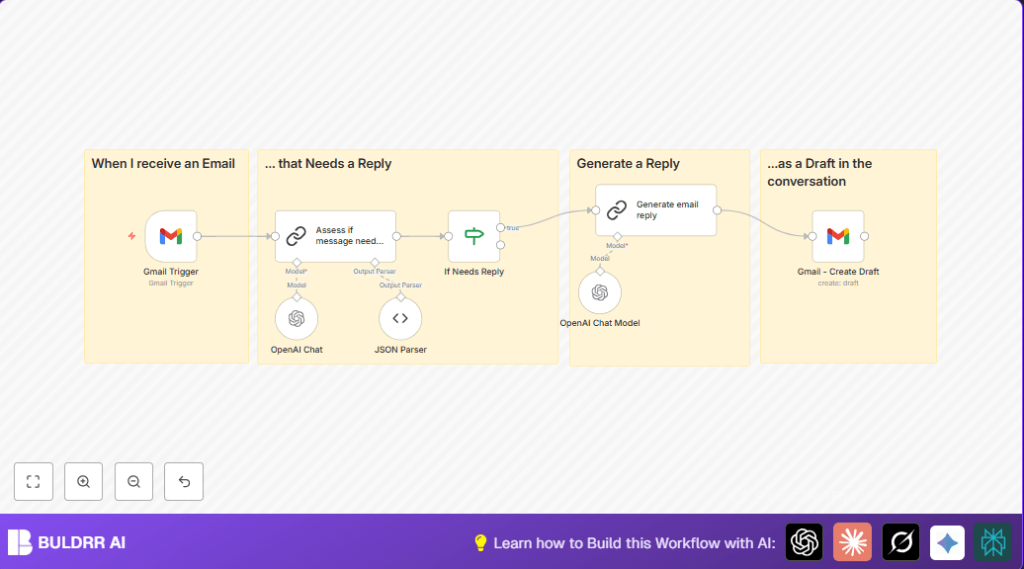

What This Workflow Does
This workflow watches incoming Gmail emails and uses AI to decide if they need a reply.
If a reply is needed, it creates a draft reply in the same Gmail thread automatically.
This saves time by helping users focus only on emails that require attention.
Who Should Use This Workflow
Users who get many emails daily and want to reduce manual email replies benefit most.
It is good for professionals who want fast, clear, business-friendly email drafts without much effort.
Tools and Services Used
- n8n: Workflow automation platform.
- Gmail API with OAuth2: Accesses email inbox and drafts.
- OpenAI API (GPT-4 and GPT-4 Turbo): AI models to assess emails and create replies.
Inputs, Processing, and Output
Inputs
- New Gmail emails coming to the inbox, excluding those sent by the same user.
- Email subject and body in HTML format.
Processing Steps
- Gmail Trigger checks inbox every minute for new emails not sent by you.
- OpenAI GPT-4 model analyzes email content to decide if a reply is needed.
- JSON Parser node extracts the true/false value for reply need.
- If the email needs reply, OpenAI GPT-4 Turbo generates a professional draft reply.
- A Gmail node creates the draft reply in the original email’s conversation thread.
Output
- Draft replies saved in Gmail threads, ready for review and sending.
- No drafts created for emails that do not need replies.
Beginner Step-by-Step: How to Use This Workflow in n8n
Import the Workflow
- Download the workflow file using the Download button on this page.
- Open the n8n editor and click “Import from File” to load the workflow.
Configure Credentials
- Add Gmail OAuth2 credentials with inbox read and draft create permissions.
- Add OpenAI API Key with access to GPT-4 and GPT-4 Turbo models.
Update Any Required IDs and Filters
- Check the Gmail Trigger node filter query (should be “-from:me”) to exclude emails you sent.
- If needed, update email addresses or thread IDs in the Gmail Draft node.
Test Workflow
- Send a test email to your Gmail account.
- Manually run the workflow or wait for the trigger to activate.
- Confirm that a draft reply is created only for emails flagged by AI as needing replies.
Activate Workflow for Production
- Turn on the workflow so it runs every minute automatically.
- Monitor logs periodically for any errors or adjustments needed.
For users running self-host n8n, this process stays the same, just ensure proper server uptime and API key security.
How This Workflow Works
The Gmail Trigger watches your inbox and sends new emails to the workflow.
OpenAI assesses if reply is needed by reading the subject and content.
The JSON Parser extracts a plain true or false response from AI.
The If node stops emails that do not need replies.
For emails needing replies, the second OpenAI node creates a polite, business casual email draft.
The Gmail node creates the draft reply in the same conversation thread.
Customization Ideas
- Switch AI models (GPT-3.5 or domain-specific) to reduce costs or improve focus.
- Change reply tone by editing prompt or temperature in the reply generation node.
- Add more filters in Gmail Trigger to ignore newsletters or auto-replies.
- Log emails and replies to Google Sheets or databases using a Set node.
Common Problems and Fixes
- JSON Parsing Errors: AI output may not match expected schema. Fix by ensuring strict JSON prompt and correct parser schema.
- Draft in Wrong Thread: Wrong or missing threadId causes disconnected drafts. Map threadId properly from Gmail Trigger node.
Summary of Benefits and Outcomes
✓ Saves time by reducing manual email responses.
✓ Ensures only emails needing replies get a draft created.
✓ Drafts are professional, clear, and match business casual tone.
✓ Helps stay organized with email thread drafts ready for review.
