
Why Pay $20/month, When you can Self Host n8n @ $3.99 only

50+ InMails. Advanced Lead search. First 2 Users only

Promoted by BULDRR AI

Viral YouTube Research Automation

A Practical Guide to Building & Using It


What This Automation Does (At a High Level)

Once set up, the system:

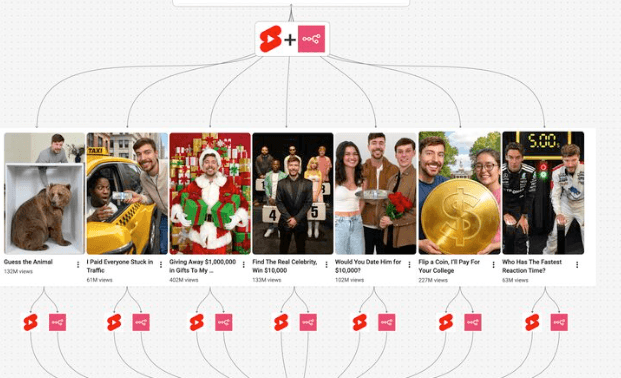
  • Fetches videos from selected YouTube channels
  • Separates long-form and short-form content
  • Analyzes performance signals (views, likes, growth)
  • Breaks down why content worked (hooks, structure, CTA)
  • Stores everything neatly in Google Sheets
  • Avoids re-analyzing the same videos again

This turns YouTube research from guesswork into a repeatable system.


Step 1: Schedule the Automation

Purpose: Run research automatically, without manual effort.

  • Use a Schedule Trigger
  • Example setup:
    • Frequency: Weekly
    • Day: Sunday
    • Time: 7:00 AM

Why this matters:

  • Weekly cadence captures trends early
  • Prevents over-analyzing daily noise
  • Keeps your dataset consistent over time

Step 2: Define Which Channels to Analyze

Tool: Google Sheets (Channels list)

Create a simple sheet with:

  • Channel name
  • Channel URL
  • Optional status field (Pending / Completed)

Why this matters:

  • Sheets act as your control panel
  • Easy to add/remove competitors
  • Non-technical and scalable

Step 3: Loop Through Channels

Purpose: Analyze multiple creators in one run.

  • Use a loop node to process channels one by one
  • Each loop iteration:
    • Pulls channel data
    • Scrapes videos
    • Runs analysis

Key insight:

  • During development, loops only execute one item
  • Once connected back, the full list runs automatically

Step 4: Scrape YouTube Content

Tool: YouTube Scraper Actor (API-based)

Configuration highlights:

  • Max long-form videos (e.g., 40)
  • Max shorts (e.g., 40)
  • Sort by views
  • Dynamic channel URL

Optional filters:

Why this matters:

  • Sorting by popularity ensures you analyze signals, not noise
  • Limits reduce API costs and improve quality

Step 5: Separate Long-Form & Short-Form Content

Use filters to split:

  • Long-form videos
  • Shorts

Then:

  • Sort each by view count (descending)
  • Limit to top performers (e.g., top 20)

Why this matters:

  • Shorts and long-form follow different psychology
  • Mixing them leads to bad conclusions

Step 6: Analyze Long-Form Videos

What You Analyze

  • Title
  • Thumbnail
  • Performance metrics

What You Skip (Intentionally)

  • Full transcript (optional)

Why:

  • Long transcripts are expensive
  • Titles + thumbnails drive clicks
  • Transcript analysis can be added later if needed

How It Works

  • AI analyzes:
    • Title positioning
    • Thumbnail visual cues
    • Messaging clarity

All outputs are saved into a structured object.


Step 7: Analyze Short-Form Videos (Deeper)

Short-form is where hooks matter most, so analysis goes deeper.

What Gets Extracted

  • Transcript
  • Thumbnail
  • Views, likes, date

What AI Analyzes

  • Hook
  • Body
  • CTA
  • Why the hook worked
  • Emotional and strategic positioning

Example insight:

  • Contrarian hooks
  • Curiosity gaps
  • Clear stance early in the video

This is reusable intelligence, not just data.


Step 8: Merge All Analysis Cleanly

Use a merge node:

  • Combine title analysis
  • Combine image analysis
  • Combine video stats

Use:

  • Combine mode
  • Merge by position

Why this matters:

  • Creates one clean data object per video
  • Avoids overwriting fields
  • Makes Sheets updates reliable

Step 9: Save Everything to Google Sheets

Two databases:

  • Long-form content
  • Short-form content

Key rule:

Result:


Step 10: Use Pinning During Development (Critical)

When testing:

  • Run expensive nodes once
  • Pin their output
  • Iterate freely downstream

Why this matters:

  • Saves API credits
  • Speeds up development
  • Prevents accidental re-scraping

This is one of the most overlooked productivity tricks.


How to Actually Use the Output (Important)

This automation is not just for “analysis”.

You can use the data to:

  • Design better thumbnails
  • Write higher-converting hooks
  • Identify recurring winning angles
  • Train future AI systems on proven patterns
  • Spot content gaps competitors ignore

Advanced use:

  • Feed this data into another AI that suggests video ideas
  • Auto-generate thumbnail prompts
  • Build a personal content strategy engine
Learn how to Build this Workflow with AI:

Follow us:

There’s no automation you can’t learn to build with BULDRR AI.

I'll show how you can implement AI AGENTS to take over repetitive tasks.

Promoted by BULDRR AI

Viral YouTube Research Automation

A Practical Guide to Building & Using It


What This Automation Does (At a High Level)

Once set up, the system:

  • Fetches videos from selected YouTube channels
  • Separates long-form and short-form content
  • Analyzes performance signals (views, likes, growth)
  • Breaks down why content worked (hooks, structure, CTA)
  • Stores everything neatly in Google Sheets
  • Avoids re-analyzing the same videos again

This turns YouTube research from guesswork into a repeatable system.


Step 1: Schedule the Automation

Purpose: Run research automatically, without manual effort.

  • Use a Schedule Trigger
  • Example setup:
    • Frequency: Weekly
    • Day: Sunday
    • Time: 7:00 AM

Why this matters:

  • Weekly cadence captures trends early
  • Prevents over-analyzing daily noise
  • Keeps your dataset consistent over time

Step 2: Define Which Channels to Analyze

Tool: Google Sheets (Channels list)

Create a simple sheet with:

  • Channel name
  • Channel URL
  • Optional status field (Pending / Completed)

Why this matters:

  • Sheets act as your control panel
  • Easy to add/remove competitors
  • Non-technical and scalable

Step 3: Loop Through Channels

Purpose: Analyze multiple creators in one run.

  • Use a loop node to process channels one by one
  • Each loop iteration:
    • Pulls channel data
    • Scrapes videos
    • Runs analysis

Key insight:

  • During development, loops only execute one item
  • Once connected back, the full list runs automatically

Step 4: Scrape YouTube Content

Tool: YouTube Scraper Actor (API-based)

Configuration highlights:

  • Max long-form videos (e.g., 40)
  • Max shorts (e.g., 40)
  • Sort by views
  • Dynamic channel URL

Optional filters:

Why this matters:

  • Sorting by popularity ensures you analyze signals, not noise
  • Limits reduce API costs and improve quality

Step 5: Separate Long-Form & Short-Form Content

Use filters to split:

  • Long-form videos
  • Shorts

Then:

  • Sort each by view count (descending)
  • Limit to top performers (e.g., top 20)

Why this matters:

  • Shorts and long-form follow different psychology
  • Mixing them leads to bad conclusions

Step 6: Analyze Long-Form Videos

What You Analyze

  • Title
  • Thumbnail
  • Performance metrics

What You Skip (Intentionally)

  • Full transcript (optional)

Why:

  • Long transcripts are expensive
  • Titles + thumbnails drive clicks
  • Transcript analysis can be added later if needed

How It Works

  • AI analyzes:
    • Title positioning
    • Thumbnail visual cues
    • Messaging clarity

All outputs are saved into a structured object.


Step 7: Analyze Short-Form Videos (Deeper)

Short-form is where hooks matter most, so analysis goes deeper.

What Gets Extracted

  • Transcript
  • Thumbnail
  • Views, likes, date

What AI Analyzes

  • Hook
  • Body
  • CTA
  • Why the hook worked
  • Emotional and strategic positioning

Example insight:

  • Contrarian hooks
  • Curiosity gaps
  • Clear stance early in the video

This is reusable intelligence, not just data.


Step 8: Merge All Analysis Cleanly

Use a merge node:

  • Combine title analysis
  • Combine image analysis
  • Combine video stats

Use:

  • Combine mode
  • Merge by position

Why this matters:

  • Creates one clean data object per video
  • Avoids overwriting fields
  • Makes Sheets updates reliable

Step 9: Save Everything to Google Sheets

Two databases:

  • Long-form content
  • Short-form content

Key rule:

Result:


Step 10: Use Pinning During Development (Critical)

When testing:

  • Run expensive nodes once
  • Pin their output
  • Iterate freely downstream

Why this matters:

  • Saves API credits
  • Speeds up development
  • Prevents accidental re-scraping

This is one of the most overlooked productivity tricks.


How to Actually Use the Output (Important)

This automation is not just for “analysis”.

You can use the data to:

  • Design better thumbnails
  • Write higher-converting hooks
  • Identify recurring winning angles
  • Train future AI systems on proven patterns
  • Spot content gaps competitors ignore

Advanced use:

  • Feed this data into another AI that suggests video ideas
  • Auto-generate thumbnail prompts
  • Build a personal content strategy engine
Learn how to Build this Workflow with AI:

Follow us:

Promoted by BULDRR AI

Our AI Articles

Learn from our AI Articles to excel in your profession ;)

THE RUBEN HASSID BLUEPRINT: Complete Creator & Channel Analysis

A comprehensive breakdown of Ruben Hassid’s digital presence, covering actionable insights, proven frameworks, and structured analysis designed for clarity, usability,...

Workflow Orchestration

1. Plan Node Default 2. Subagent Strategy 3. Self-Improvement Loop 4. Verification Before Done 5. Demand Elegance (Balanced) 6. Autonomous...

How to Use OpenClaw Skills — A Complete Beginner’s Guide

What is OpenClaw? OpenClaw is an open-source AI assistant designed as “AI that actually does things.” It doesn’t just chat....

Build a $10,000 RAG system using Gemini + Claude Code

This ‘$10,000 RAG system’ isn’t about expensive infrastructure—it’s about how you structure retrieval....

Free OpenRouter API Keys & Free Models List [Updated April 2026]

Get a free OpenRouter API key in minutes. See all free models available in 2026, rate limits, and how to...

7 AI Agents Clients Are Paying $2,000+/Month For in 2026 [Real Examples]

Discover the 7 AI agents businesses are actively buying in 2026 — with real pricing, use cases, and how to...

Comprehensive Channel Analysis: Alex Hormozi

Alex Hormozi gives away what others sell for $10K—not to make money from content, but to manufacture million-dollar businesses at...

Beginner to Pro Guide: Using the Agentic SEO Claude Skill

This isn’t just an SEO audit—it’s a feedback loop where your system analyzes, prioritizes, and answers based on your data,...

Top 60 Claude Skills, Workflows & GitHub Repos for AI

This isn’t just a list. It’s a full-stack AI toolkit: from coding agents → to frameworks → to workflows →...

How to Use Claude Code for Free in 2026 (No Subscription Needed)

Yes, you can use Claude Code for free. This guide shows exactly how — free tier limits, local model workarounds,...

Frequently Asked Questions

We share all our insights and resources for free, but building them isn’t cheap. Ads help us recover those costs so we can keep offering everything at no charge forever.

Yes, Ofcourse. Contact us and we’ll set it up. We also offer 100+ hours of free visibility to select brands.

No, nothing at all. In fact, many ads come with extra discounts for you.

Yes, sometimes. If you buy through our links, we may earn a small commission at no extra cost to you.

1:1 Free Strategy Session
Your competitors are already automating. Are you still paying for it manually?

Do you want to adopt AI Automation?

Every hour your team does repetitive work, you're burning real money.
While you wait, faster businesses are cutting costs and moving quicker.
AI and automations aren't the future anymore — they're the present.

Book a live 1-on-1 session where we show you exactly which of your daily tasks can be automated — and what it’s costing you not to.