

What This Automation Does
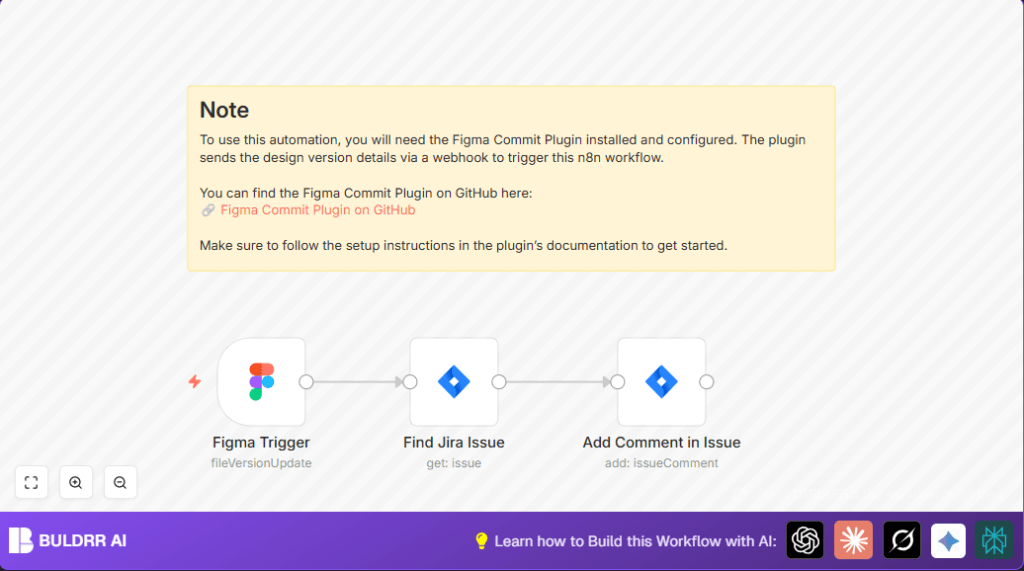
This workflow listens for new Figma file versions and sends updates to Jira issues automatically.
It stops manual work of copying and pasting design links and version details.
When a design file version changes in Figma, the workflow finds the right Jira task and adds a comment with all new info.
This saves time and avoids missing updates for the development team.
Tools and Services Used
- n8n: Workflow automation platform to create and run the automation.
- Figma API & Commit Plugin: Sends webhook data when design files get new versions.
- Jira Software Cloud API: Receives requests to find issues and post comments.
How This Workflow Works: Inputs → Process → Output
Inputs
- Webhook data from Figma Commit Plugin about new file version.
- Issue key from Figma commit payload to identify the Jira issue.
Processing Steps
- The Figma Trigger node captures version update events.
- The Find Jira Issue node uses the issue key to find the correct Jira issue.
- The Add Comment in Issue node posts a comment with version details, page name, design link, and timestamp.
Output
- A new comment appears on the right Jira issue every time a new design version is committed.
- Project managers and developers stay informed without manual work.
Beginner Step-by-Step: Using This Workflow in n8n Production
Import the Workflow
- Download the workflow file using the Download button on this page.
- Open the n8n editor where you want to run the workflow.
- Click on “Import from File” and select the downloaded workflow file.
Configure Credentials and Settings
- Add your Figma API credentials in the Figma Trigger node.
- Add your Jira Software Cloud API credentials in the Jira nodes.
- Update any IDs, emails, or keys inside nodes if needed, like your Figma Team ID or Jira Issue Keys.
Test and Activate
- Run a test by committing a new Figma version or sending test data to the webhook.
- Check if the Jira issue receives the comment correctly.
- Activate the workflow to run continuously by toggling the switch to ON.
This simple import and configure method gets the workflow running fast without building from zero.
Customization Ideas ✏️
- Modify the comment in the Add Comment in Issue node to include who committed or other tags.
- Add extra Jira nodes to move the issue status depending on version names like “review”.
- Use the IF node to only comment on certain pages or projects to avoid unwanted updates.
Troubleshooting ????
Error: “Could not find issue with key” in Find Jira Issue
This usually means the Jira issue key from the Figma payload is missing or wrong.
Check that the key matches Jira’s exact format and case sensitivity.
No Comments in Jira After Trigger Fires
Check if the Jira API Key has permission to add comments.
Validate the expressions used in the comment field in n8n to make sure they pull correct data.
Pre-Production Checklist ✅
- Confirm Figma Commit Plugin sends webhooks to the exact n8n Figma Trigger webhook URL.
- Try a dummy Figma version update to see if the webhook hits n8n.
- Verify Jira issue keys in the test are real and correct.
- Make sure API credentials for Figma and Jira nodes are authorized and have needed scopes.
- Review comment content formatting before going live.
Deployment Guide
Turn on the workflow using the toggle in n8n editor to activate automation.
Watch n8n execution logs for errors or issues.
Use webhook execution logs to check incoming data structure.
Remember to check Jira permissions and refresh API Keys periodically.
If hosting n8n on own server, consider using self-host n8n for better control.
Summary Result
✓ Saves project managers many hours by automating design updates to Jira.
✓ Removes manual copying and errors.
✓ Keeps design and development teams in sync better.
→ New Figma versions trigger comments in Jira issues automatically.
→ Project tracking improves without extra effort.
