The goal is not persuasion. The goal is for the buyer to conclude:
“Working with you is the safest, smartest next step.”
Section A — The “Offer Doc”
(replaces PDF proposals)
PDF decks feel generic and overly designed. A Google Doc or Notion page feels tailored and more believable.
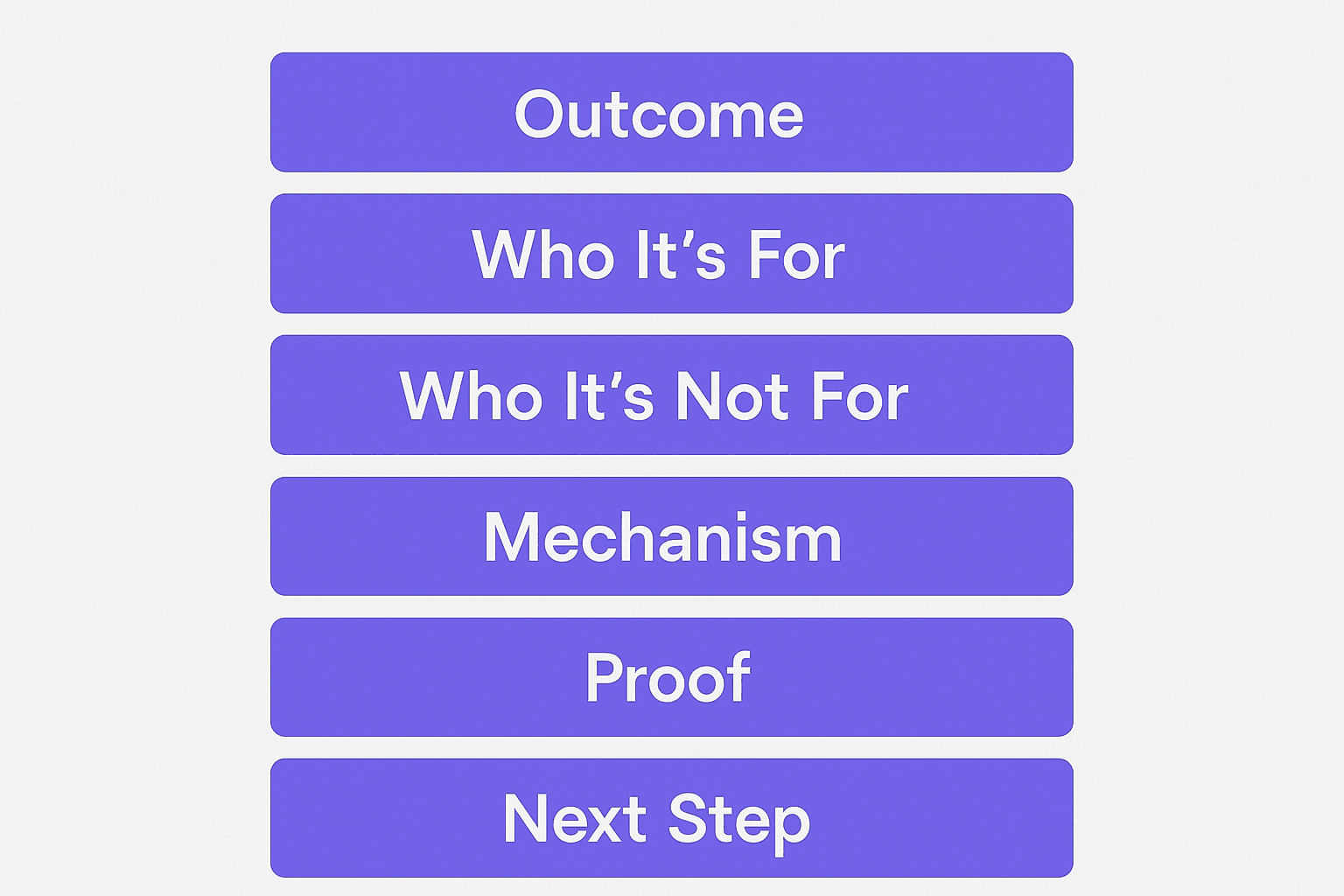
Use this exact structure:
Section
Purpose
Outcome
The result they get from working with you
Who it’s for
Confirm they’re in the right place
Who it’s NOT for
Builds trust by disqualifying wrong fits
Mechanism
Your unique method or process
Proof
Testimonials or short case examples
Next Step
CTA → Book the pitch call
Keep formatting clean, simple, and short.
Important: Send the doc after they show interest — not earlier.
Section B — The Two-Call Close Structure
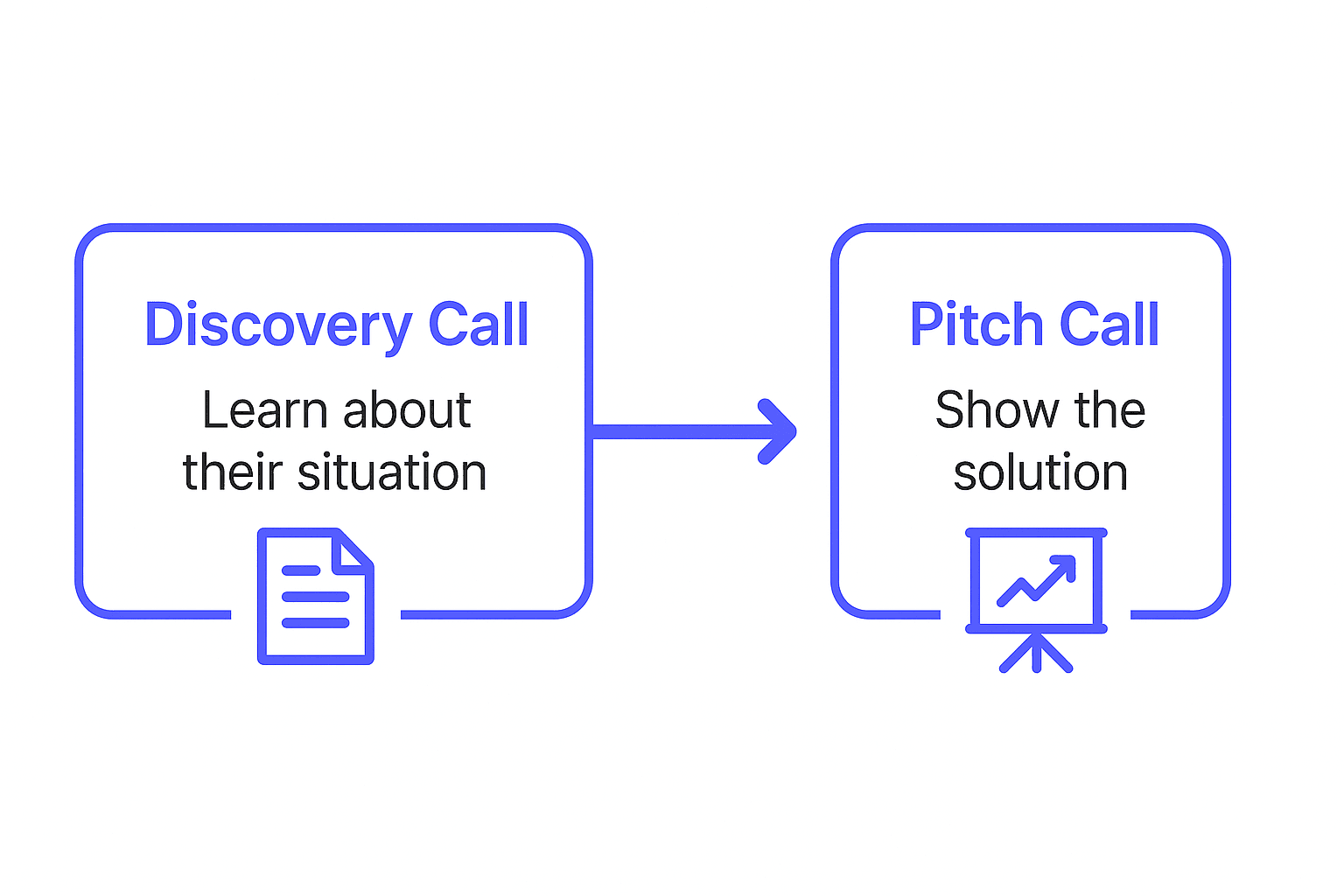
Matt’s closing system uses:
Discovery Call — about them
Pitch Call — about your solution
This reduces pressure and doubles close rates because the buyer first feels understood.
Discovery Call Script
(All about the prospect — not your offer)
Opening:
“I want to make sure I understand your business first. If I can help, we’ll book another call where I walk you through the plan. If not, I’ll point you in the right direction. Does that sound ok?”
Core questions (choose 4–6): • What are you trying to achieve in the next 90 days? • What’s currently blocking you? • What have you already tried? • What happens if this problem continues? • Are you fully responsible for solving this?
Collect exact phrases they use → use them later in the Pitch Call.
Close the call with:
“Thanks, this is helpful. I’ll put together a clear plan with options. Let’s review it in 1–2 days.”
Pitch Call Script
(Reflect their words back)
Use your notes:
“You mentioned that [their problem] is costing you [impact]. You also said you want [result] in the next [timeframe]. Is that right?”
Then move to your solution → inside the Offer Doc.
Your tone should feel like:
• Calm • Certain • A professional advising a serious issue
Not pushing. Not selling features.
Section C — Price Presentation That Works
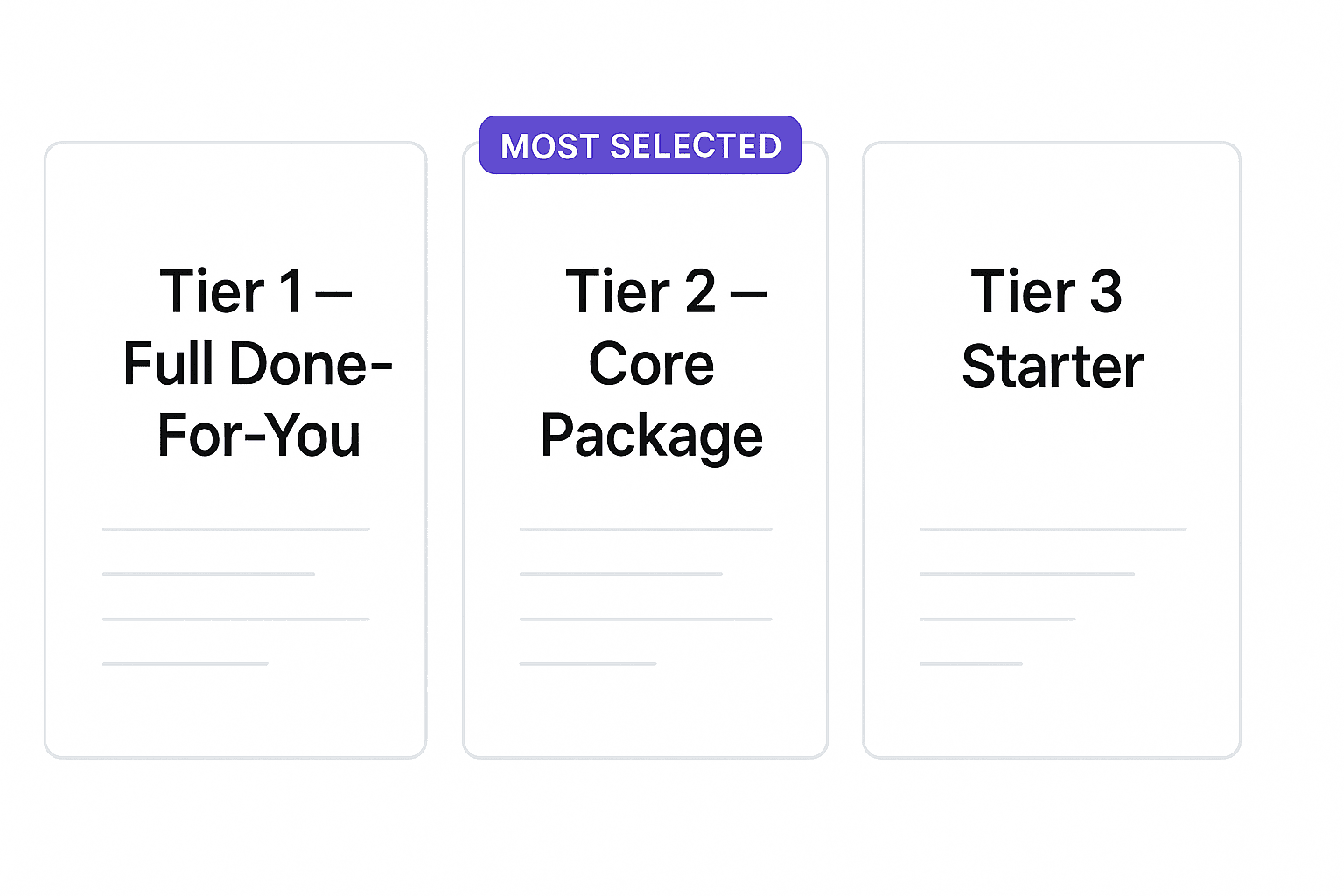
Never show one price. Use three tiers to anchor value.
Example for website services:
Tier 1 — Full Done-for-you Growth Plan: $14,000
Tier 2 — Core Build + Conversion Fixes: $9,000
Tier 3 — Starter Build: $5,500
Follow with:
“Which one are you leaning toward?”
This assumes the sale and invites a choice, not a yes/no debate.
If budget resistance comes: Offer a payment plan first. If needed, a downsell second (e.g., strategy workshop).
Goal: Capture revenue while keeping them in your ecosystem.
Section D — Handle Objections Calmly
View objections as: • Lack of clarity or • Fear of making a mistake
Ask:
“What specifically makes you hesitate?”
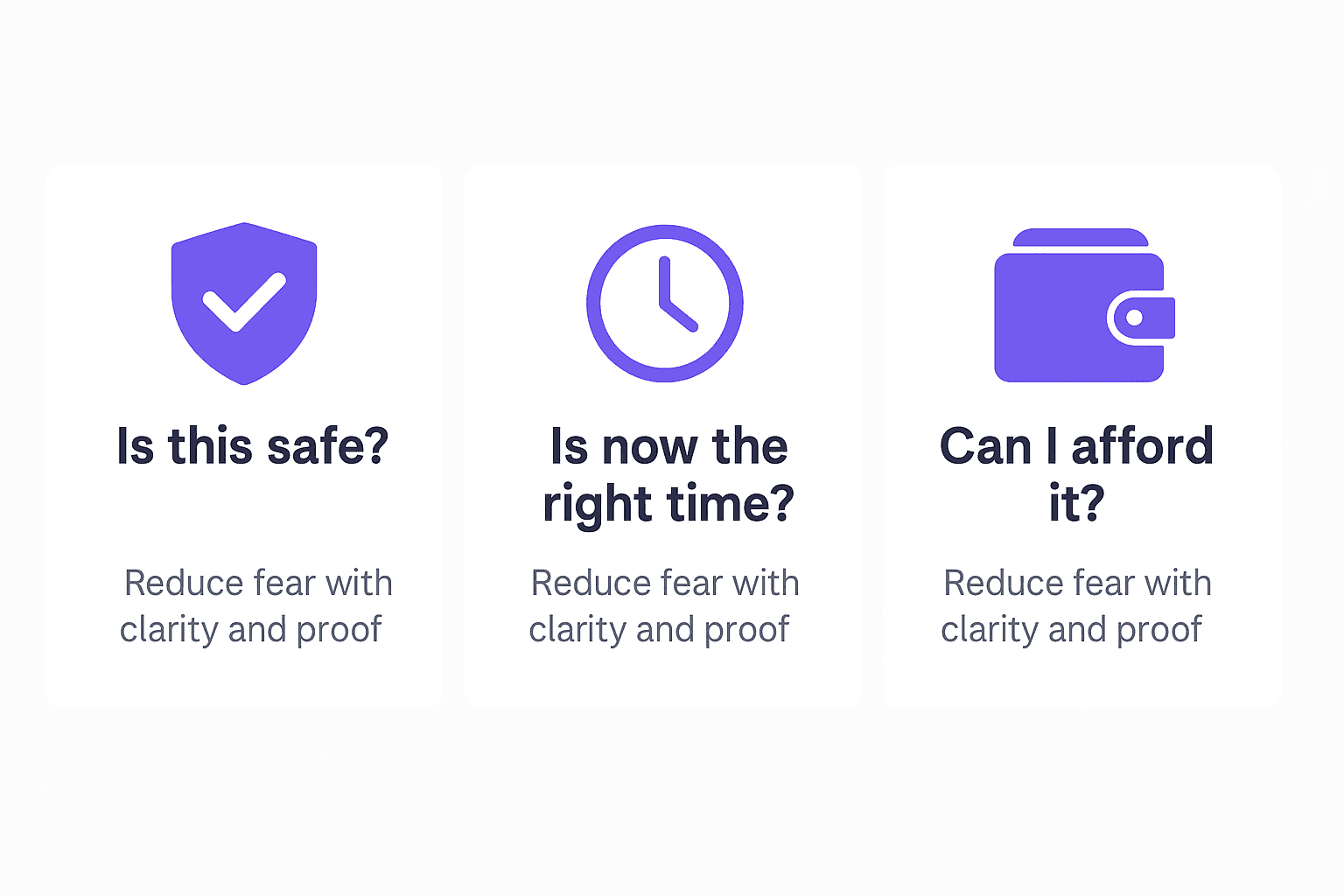
Most objections fall into 3 categories:
Fear
What to do
“Will this work for me?”
Repeat their specific situation + relevant proof
“Is now the right time?”
Ask about cost of delay
“Can I afford this?”
Offer payment structures
Your job isn’t to push. Your job is to remove friction.
Section E — Post-Commitment Protocol
(Stop buyer’s remorse immediately)
The moment they say yes is fragile. Matt emphasizes immediate “momentum locking.”
Do not end the call after payment.
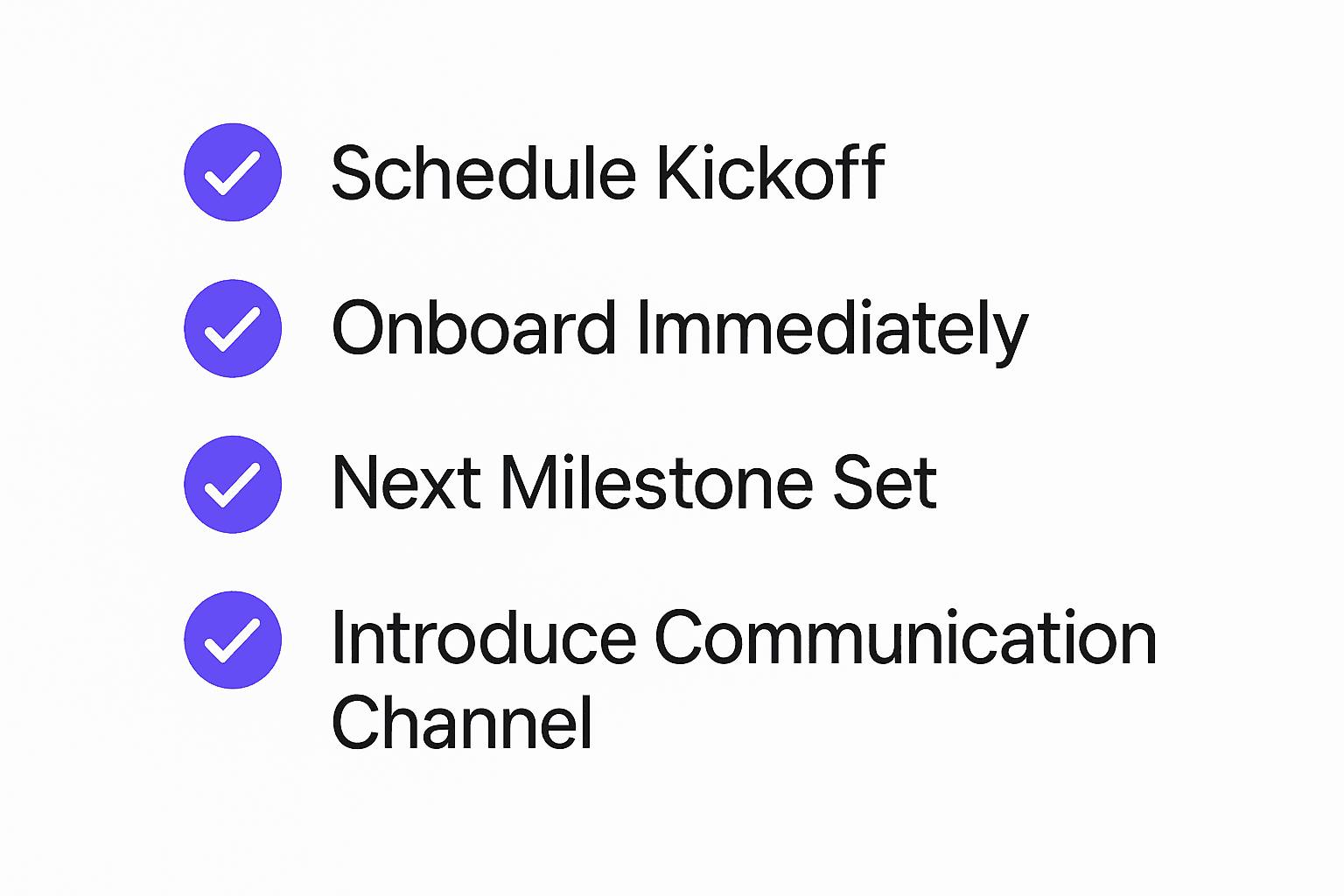
While still on the call: • Schedule kickoff • Send onboarding form • Add them to Slack/WhatsApp • Introduce next milestone
☑️ Create Offer Doc (clear, simple, value-first) ☑️ Run 2-call structure (Discovery → Pitch) ☑️ Use a 3-tier pricing model ☑️ Add payment plan + downsell options ☑️ Onboard clients on the same call ☑️ Track close rates weekly ☑️ Hire setter once demand > supply
Implement these, and your business becomes predictable and scalable.
Final Goal of Playbook #5
You move from:
“Trying to get clients”
to:
Clients trying to get you.
That’s the Demand Surplus Matt builds his business on.
NEXT:- Want to talk to me? Share your Learnings on Linkedin Comments next and I will Invite you into my Private Webinar (worth $149) for FREE.
The goal is not persuasion. The goal is for the buyer to conclude:
“Working with you is the safest, smartest next step.”
Section A — The “Offer Doc”
(replaces PDF proposals)
PDF decks feel generic and overly designed. A Google Doc or Notion page feels tailored and more believable.
Use this exact structure:
Section
Purpose
Outcome
The result they get from working with you
Who it’s for
Confirm they’re in the right place
Who it’s NOT for
Builds trust by disqualifying wrong fits
Mechanism
Your unique method or process
Proof
Testimonials or short case examples
Next Step
CTA → Book the pitch call
Keep formatting clean, simple, and short.
Important: Send the doc after they show interest — not earlier.
Section B — The Two-Call Close Structure
Matt’s closing system uses:
Discovery Call — about them
Pitch Call — about your solution
This reduces pressure and doubles close rates because the buyer first feels understood.
Discovery Call Script
(All about the prospect — not your offer)
Opening:
“I want to make sure I understand your business first. If I can help, we’ll book another call where I walk you through the plan. If not, I’ll point you in the right direction. Does that sound ok?”
Core questions (choose 4–6): • What are you trying to achieve in the next 90 days? • What’s currently blocking you? • What have you already tried? • What happens if this problem continues? • Are you fully responsible for solving this?
Collect exact phrases they use → use them later in the Pitch Call.
Close the call with:
“Thanks, this is helpful. I’ll put together a clear plan with options. Let’s review it in 1–2 days.”
Pitch Call Script
(Reflect their words back)
Use your notes:
“You mentioned that [their problem] is costing you [impact]. You also said you want [result] in the next [timeframe]. Is that right?”
Then move to your solution → inside the Offer Doc.
Your tone should feel like:
• Calm • Certain • A professional advising a serious issue
Not pushing. Not selling features.
Section C — Price Presentation That Works
Never show one price. Use three tiers to anchor value.
Example for website services:
Tier 1 — Full Done-for-you Growth Plan: $14,000
Tier 2 — Core Build + Conversion Fixes: $9,000
Tier 3 — Starter Build: $5,500
Follow with:
“Which one are you leaning toward?”
This assumes the sale and invites a choice, not a yes/no debate.
If budget resistance comes: Offer a payment plan first. If needed, a downsell second (e.g., strategy workshop).
Goal: Capture revenue while keeping them in your ecosystem.
Section D — Handle Objections Calmly
View objections as: • Lack of clarity or • Fear of making a mistake
Ask:
“What specifically makes you hesitate?”
Most objections fall into 3 categories:
Fear
What to do
“Will this work for me?”
Repeat their specific situation + relevant proof
“Is now the right time?”
Ask about cost of delay
“Can I afford this?”
Offer payment structures
Your job isn’t to push. Your job is to remove friction.
Section E — Post-Commitment Protocol
(Stop buyer’s remorse immediately)
The moment they say yes is fragile. Matt emphasizes immediate “momentum locking.”
Do not end the call after payment.
While still on the call: • Schedule kickoff • Send onboarding form • Add them to Slack/WhatsApp • Introduce next milestone
☑️ Create Offer Doc (clear, simple, value-first) ☑️ Run 2-call structure (Discovery → Pitch) ☑️ Use a 3-tier pricing model ☑️ Add payment plan + downsell options ☑️ Onboard clients on the same call ☑️ Track close rates weekly ☑️ Hire setter once demand > supply
Implement these, and your business becomes predictable and scalable.
Final Goal of Playbook #5
You move from:
“Trying to get clients”
to:
Clients trying to get you.
That’s the Demand Surplus Matt builds his business on.
NEXT:- Want to talk to me? Share your Learnings on Linkedin Comments next and I will Invite you into my Private Webinar (worth $149) for FREE.
Building AI agents, n8n workflows and end-to-end automation for 30+ Brands across India, the US, Europe, Dubai & Australia. 7+ years of Experience saving founders real hours every week - no code required.
Ask more Questions about this Blog with AI:
Our AI Articles
Learn from our AI Articles to excel in your profession ;)